
Words & Photos By Carol Polich
Let’s face it: waterfowl come as a complete package of “E” words—exquisite and electrifying in their colorful suit of feathers. With their territorial behaviors during the spring mating season, they become exciting to photograph. Be on the lookout for the males’ bobbing heads when anticipating an explosive charge, running across the water in a chase, and then taking flight. If a female doesn’t like her suitor, she will also defend her space. It’s all about territorial displays and disputes with lots of energy starting in April and continuing into late May and June.
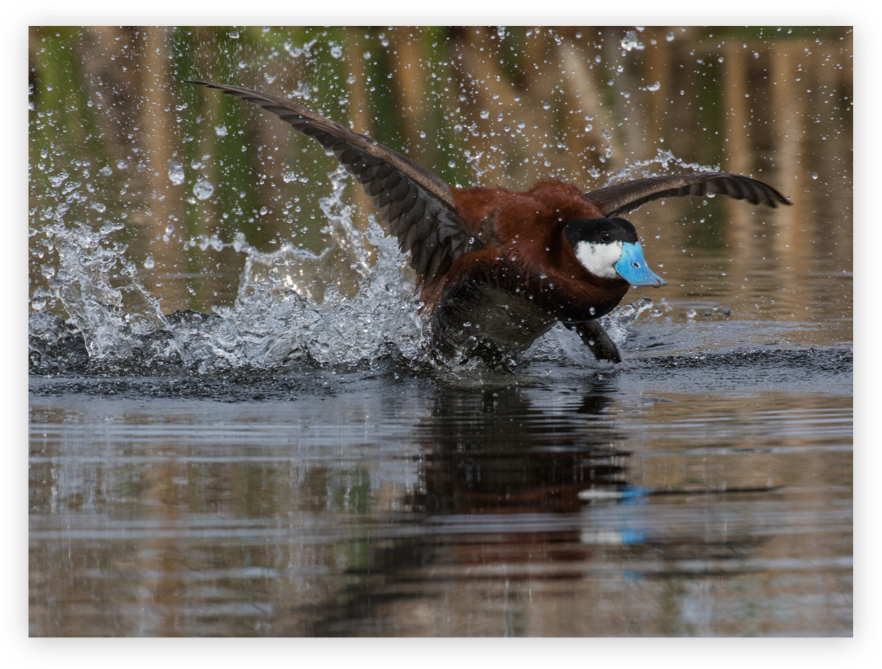
The Ruddy Duck: Small, Fierce, & Formidable
When no immediate response follows, the male repeats his courtship displays as he moves through the pond reeds. These repeated displays often lead to territorial disputes with other males as females appear in the area. The female Ruddy Duck, though more muted in color, is no less aggressive and is highly selective in choosing a mate.
Rival Species on the Marsh Stage
Fiercely competitive and not to be outdone with territorial conquests are the Cinnamon Teal, Northern Shoveler, and the American Coot. The Teal and Cinnamon have exquisite colors when they are in full display racing after mute colored females.
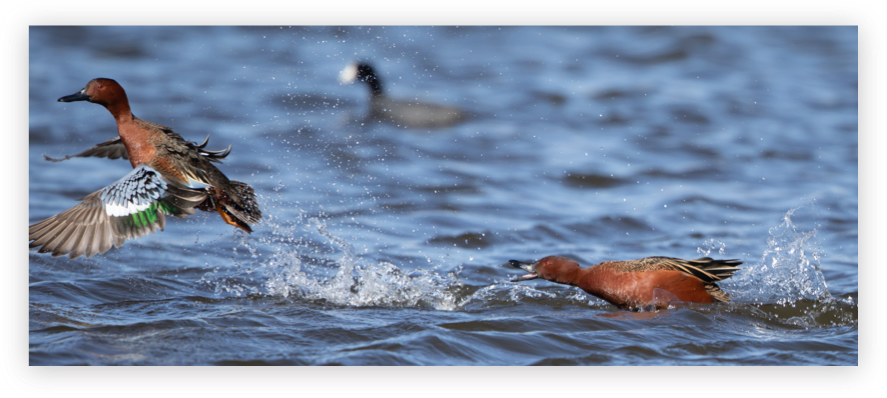
Cinnamon Teal: Color, Conflict, & Chase
Explosive energy continues as a Cinnamon Teal charges another male that dares to approach a sequestered female. Cinnamon-colored bodies, accented with green and blue feathers, burst through the splashing water as the disputing males give chase. Bills snap and ruby-red eyes flash as the birds plunge at one another.
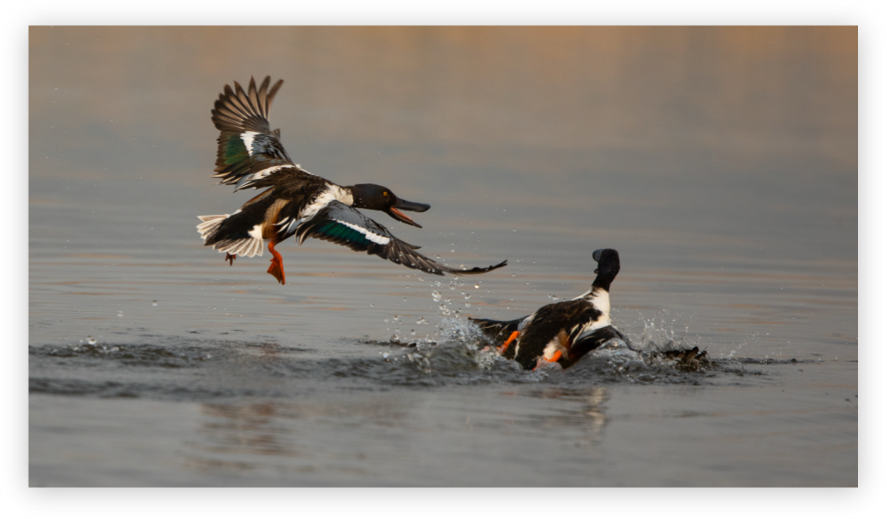
Northern Shoveler: A Dabbling Defender
The Northern Shoveler is a handsome dabbling duck with a large, spatulate bill designed for skimming the water’s surface rather than diving for food. Electrifying, orange-colored feet propel him across the water during display. His 30-inch wingspan unfolds, exposing exquisite colors of white, rust, green, and a powdery blue shoulder patch. The yellow eye is a brilliant disk set within an emerald-green head. In full color and charged with excess energy, he willingly defends his territory.
The American Coot: Odd Appearance, Explosive Behavior
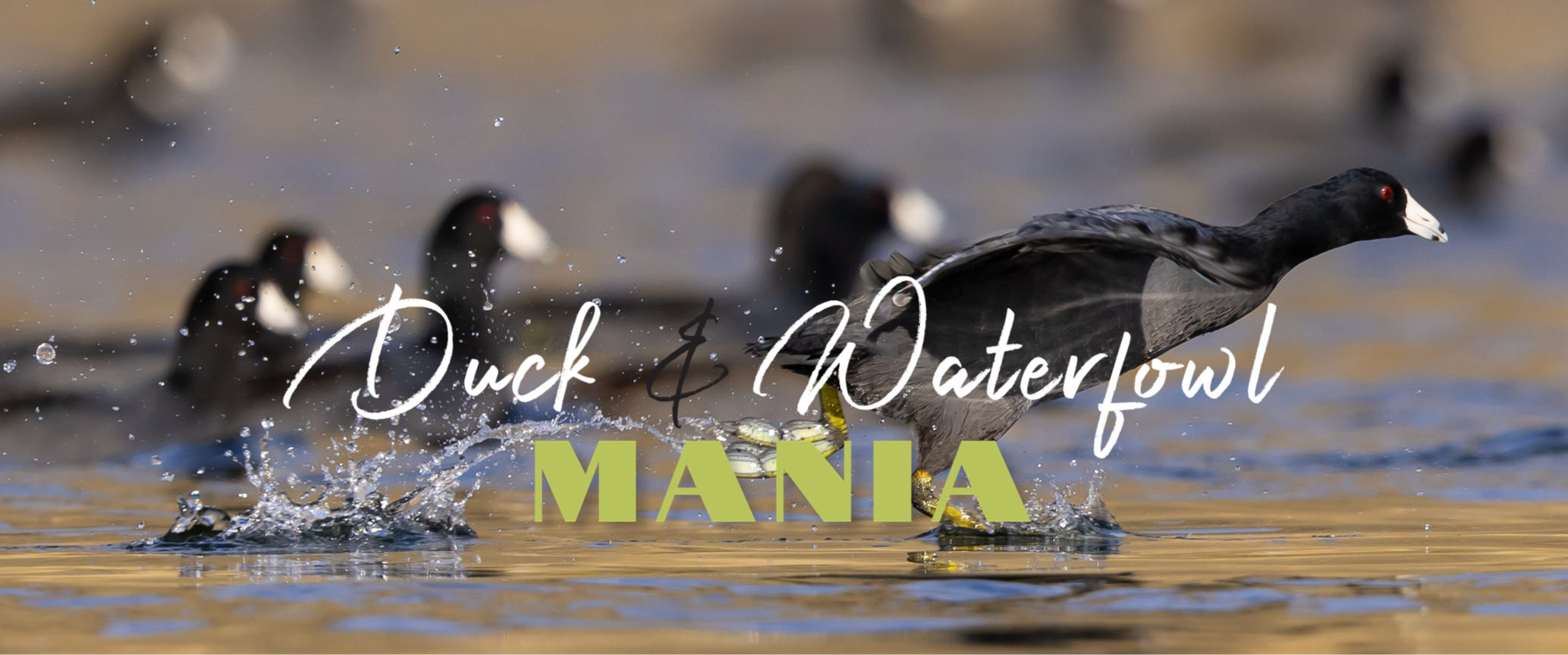
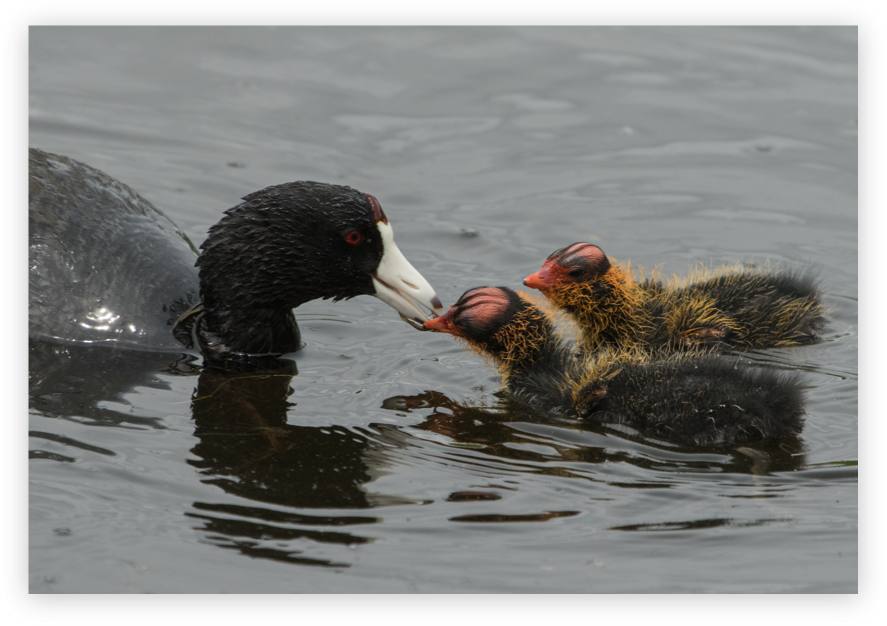
The American Coot has an unusual, dark, chicken-like body. A pointed, ivory-colored bill and prominent red eye distinguish it above the waterline. Although the coot shares waterways with ducks, it is not a member of the duck family and lacks webbed feet. Less colorful than the fowl described earlier, it is equally explosive when running across the water on its strange-looking, yellowish-green lobed feet. When coots gather, excited squabbling often leads to bursts of running and brief fight displays, during which they appear to stand in the water and kick at one another. Coots, grebes, and loons all share these lobed feet, which allow them to propel across the water to take flight. If one of these birds is found floundering on land, placing it in water can help it regain movement.
Grebes & the Art of Courtship
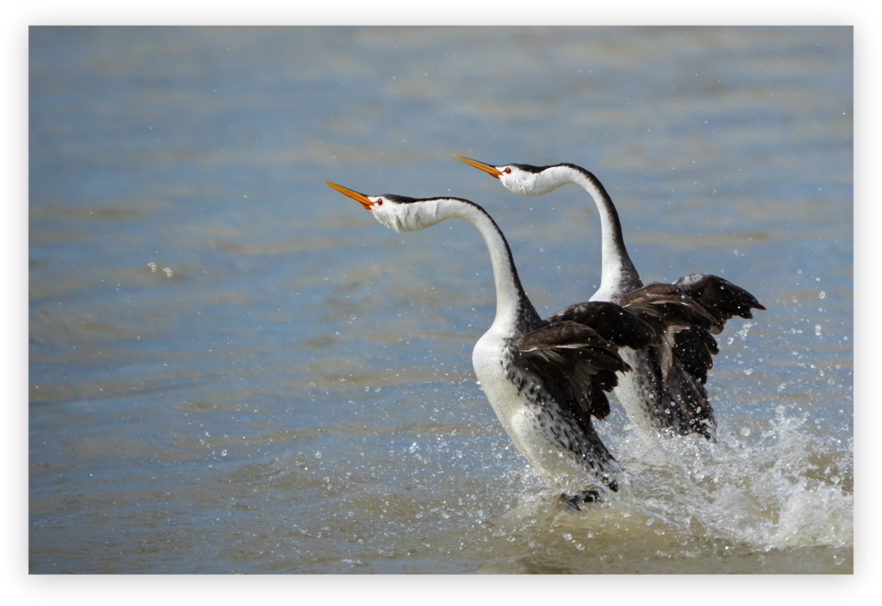
Graceful and elegant courtship displays are characteristic of the Grebe family. Western Grebes perform a variety of romantic ceremonies, beginning with the Weed ritual. The pair dives for aquatic plants and resurfaces together, chest to chest, shaking the weeds before tossing them aside in a synchronized nest-building display.
The mating dance performed by Clark’s and Western Grebes is both spectacular and comical. As a precursor to their “Rushing” performance, the birds face one another, screech, and dip their bills. The ballet continues with arcing necks that rise and fall. Suddenly, the pair rise upright out of the water and rapidly paddle their webbed feet across the surface in perfect unison, creating a dramatic water dance. Splashing water adds an energized, animated dimension to the performance.
From Incubation to Independence
After approximately 24–28 days of incubation, robust chicks emerge and swim behind—or even atop—the adults. Grebe parents delicately feed fish to their young, while coots tend to their oddly shaped chicks. A flock of Merganser chicks follows its mother as she navigates a river current winding between boulders. When it is time to rest, she waddles onto a rock, and the chicks gather close beside her.
Each spring, the waterfowl ecosystem renews itself as chicks mature and gradually emulate the behaviors of their parents.
When Calm Turns to Chaos on the Pond
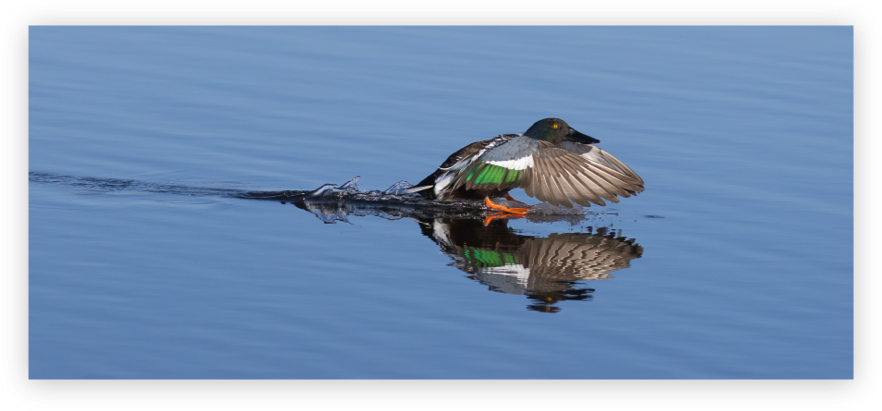
If the pond appears quiet and serene upon arrival, patience is short-lived. Within minutes, flocks of Shovelers and Teals sweep in, feet extended, skimming the water’s surface. Once this happens, waterfowl mania erupts. For the photographer, it becomes both a challenge and an opportunity—demanding quick reflexes, sharpened skills, and a deeper understanding of waterfowl behavior.