Photos by Ashton Jones

By Maggie Slepian
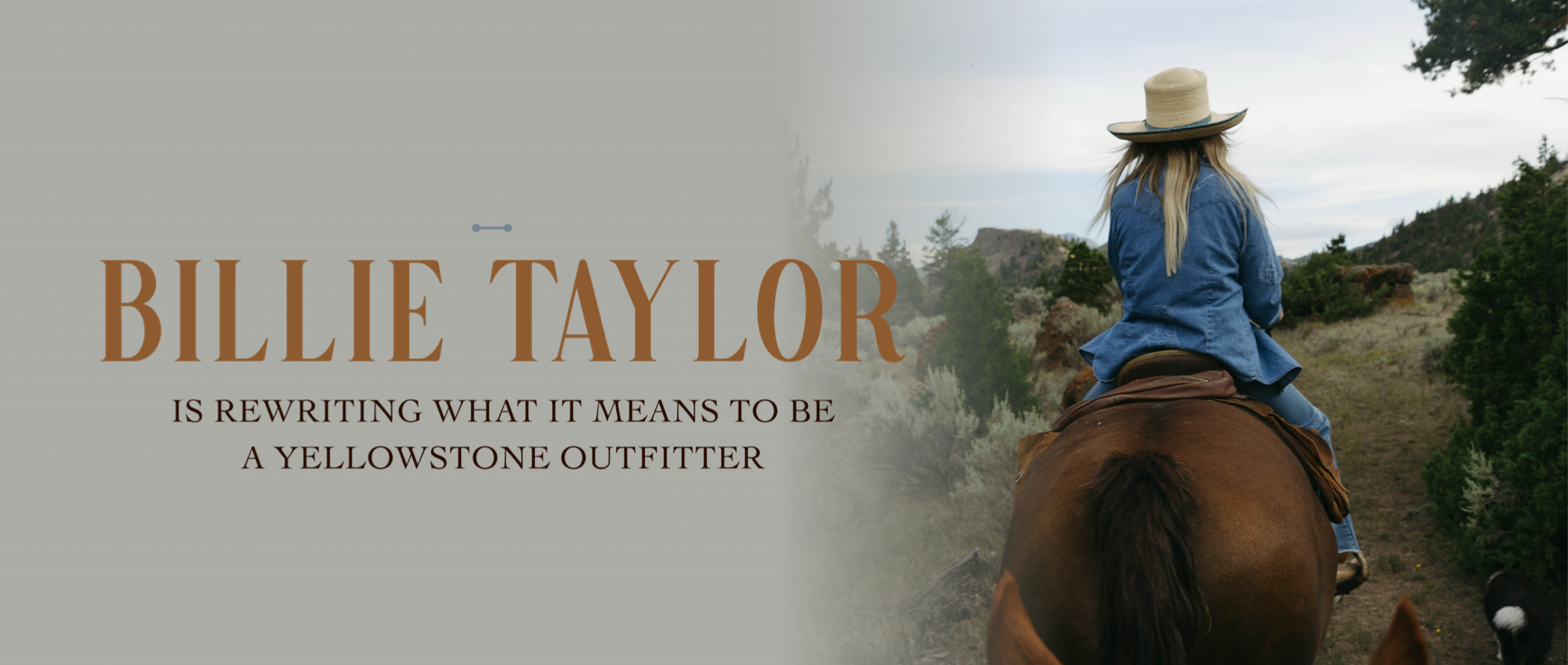
Yellowstone Roughriders is the only female-owned outfitter in the park, but that’s just the beginning.
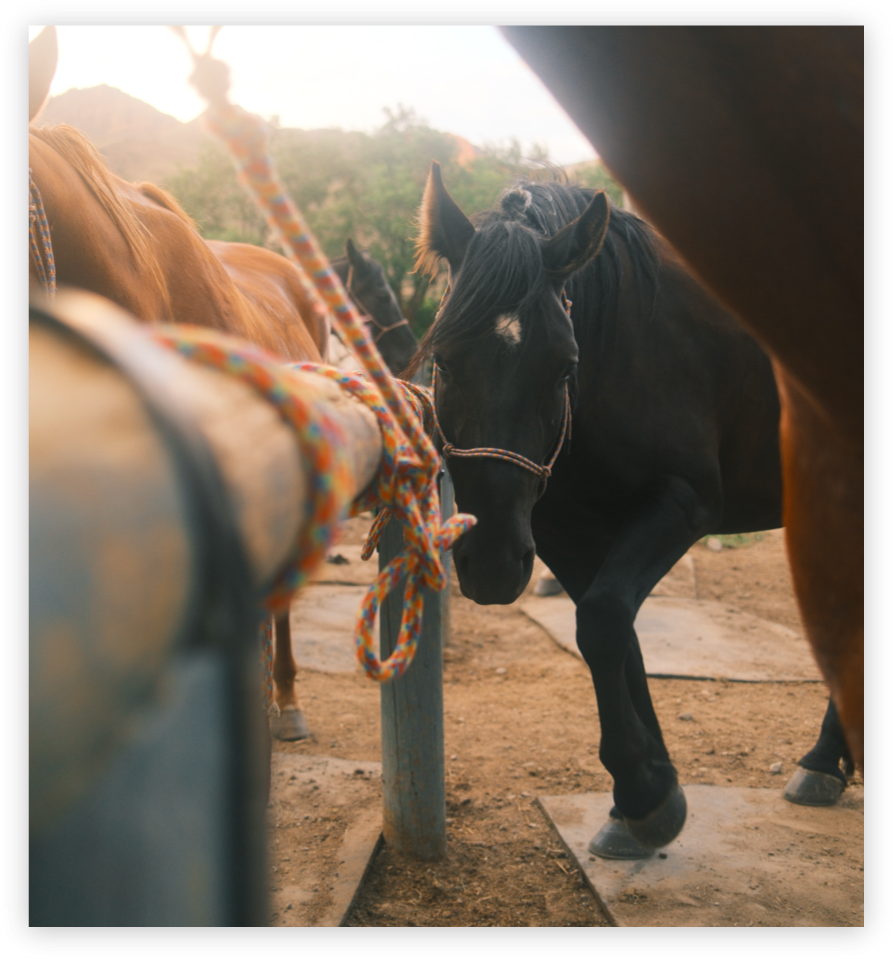
It’s early in the morning on a sunny July day in Livingston, and Billie Taylor is twisting her hair into a ponytail under her company’s logo cap, hopping into one of her six trucks, and starting the 45-minute drive to Corwin Springs where her dozens of horses are out on grass, munching hay in the corrals, or standing patiently at the rail before being trailered into Yellowstone National Park for the day’s rides.
Taylor is the sole owner of Yellowstone Roughriders, a horseback outfitter set apart not only as the only female-owned operator in Yellowstone National Park, but also by its unique blend of traditional western offerings and modern hospitality.
Along with private, group, half-day, and full-day rides in Yellowstone, her company runs one-hour and two-hour rides from her ranch near Corwin Springs, a lunch cookout and dinner cookout at her custom pavilion via horse-drawn wagon, overnight options, fish-and-ride customizations, and even the occasional wedding and engagement. Her next step is to secure a permanent home for the company instead of leasing land. This involves securing traditional financing—a challenging task for outfitting businesses—but Taylor isn’t willing to give up ownership to private investors. Once again, she’s taking the hard way. But things are progressing, and owning land and offering lodging isn’t too far in the future for Yellowstone Roughriders.
As she cruises past the silhouette of Emigrant Peak, Taylor recounts her origin story, which guests love to hear if they’re lucky enough to sit near her at the cookout.
“When I was 12 years old, I came to Montana for the first time. I took one look at the mountains, elbowed my way through my brothers, tugged on my dad’s pant leg and told him, ‘I’m going to live here someday,’ and that's exactly what I did.”
“If I wasn’t in Montana, I was thinking about it,” she continues. “I knew I had to find a way to live here and support my favorite thing—horses. The only thing that made sense was figuring out how to make the horses support themselves.”
Years after her first visit to Montana, Taylor started working as a wrangler at Roosevelt Corrals in Yellowstone when she was in college, quickly becoming manager of the 80-horse operation that sent hundreds of guests on horseback and wagon rides each day.
After 11 seasons at Roosevelt, Taylor bounced around the west for a few years, dipping a toe into agricultural lending, running sleigh rides in Washington, and spending a winter season doing snowcoach tours in Yellowstone. But her heart never left the outfitting world, and when the opportunity came to buy Yellowstone Roughriders and transform it into her own operation, she didn’t hesitate.
Few hospitality businesses have as much red tape as commercial stock guiding in a national park. Even once she owned Yellowstone Roughriders, Taylor couldn’t start leading rides. There are only 37 stock-guiding permits for Yellowstone National Park, and she had to get the permit transferred to her name before she could operate. Among other things, this involved preparing a 176-page document to convince the National Park Service that she was qualified to operate within park boundaries.
“It felt like a thesis,” she says. “They wanted to know my credit history, all records, bank accounts, and how long I worked in the parks. They wanted to know what my parents did for a living.”
She shakes her head. “I’m not joking. I literally had to record what my parents did for work.”
Right as she was about to file, the government shut down, turning the six-month transfer process into a full year. Finally, Taylor was awarded a livestock concession contract, and CCYEL-138 was officially in her name.
But these permits are immensely sought after and hard to procure. Once you get it, you need to keep it. This includes annual evaluations and the creation of an extensive NPS Concessions Prospectus every 10 years.
“At that point, someone can come in and take my permit. If someone applies for it, the National Park Service can transfer it.”
Taylor is relaxed, though. She filed her Prospectus this summer, and her official “Superior” rating means she has a chance to reclaim her permit before losing it, but it’s certainly not a one-and-done deal. These are coveted permits, and the Prospectus is not a guarantee of renewal, though it did prompt Taylor to review the financial concessionaire reports in a way she hadn’t expected.
“That’s when I saw the numbers,” she says, visibly emotional as she turns off Highway 89 toward her corrals. “I looked at the numbers and saw I was the top contributor for the past three years in Yellowstone National Park. That’s when it became real.”
If she had any doubts about her place in the outfitting world, seeing her number-one ranking blew them away. All the risks, investments, and challenges that come with running a massive operation have been worth it.
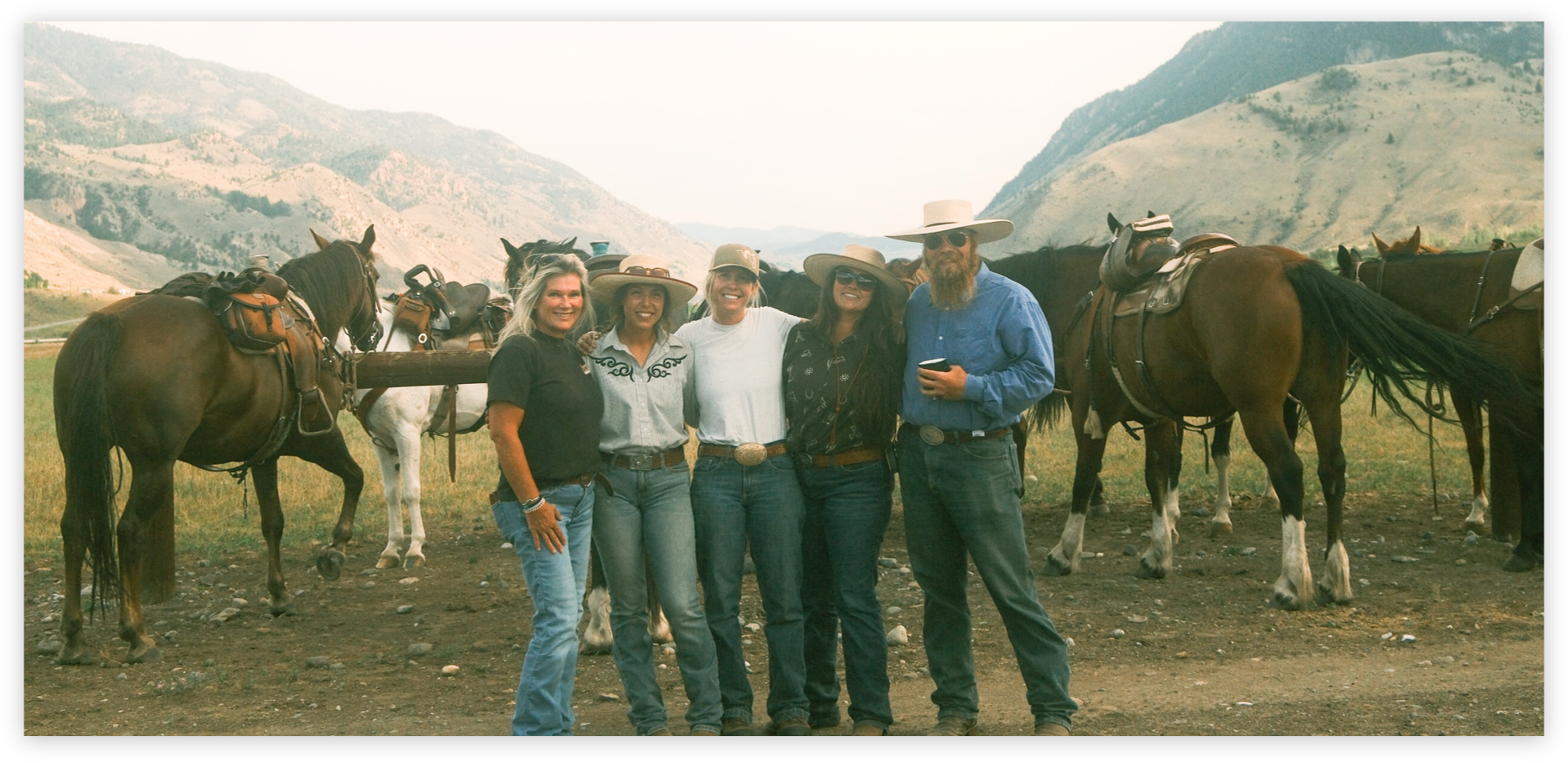
“I remember thinking, why can’t we have it all? Why couldn’t we make a living, work with horses, and stay connected to the land? We did that, and now we are able to share it with guests in an authentic way.” She climbs out of the truck and starts helping load horses into the trailer.
“It’s not your traditional string of mules heading down the trail,” Taylor says, checking a cinch and straightening the halter on a gentle palomino. “It’s outfitting meets hospitality.”
“It’s not your traditional string of mules heading down the trail,” Taylor says, checking a cinch and straightening the halter on a gentle palomino. “It’s outfitting meets hospitality.”
“I want this to be a place where people can build a career and raise a family, and where the community we create within Yellowstone Roughriders strengthens the Gardiner community.”
The horses are loaded, and the truck and trailer ease down the hill toward the Roosevelt Arch. Taylor strides into the barn to check the guest list for tonight’s cookout and to confirm tomorrow’s bookings.
“I want Yellowstone Roughriders to become a staple of the North Entrance of Yellowstone—a place where people stop, spend the day, ride, eat, meet the horses, and see this way of life. We are one of a kind, and it’s one of those things you have to experience to understand.”
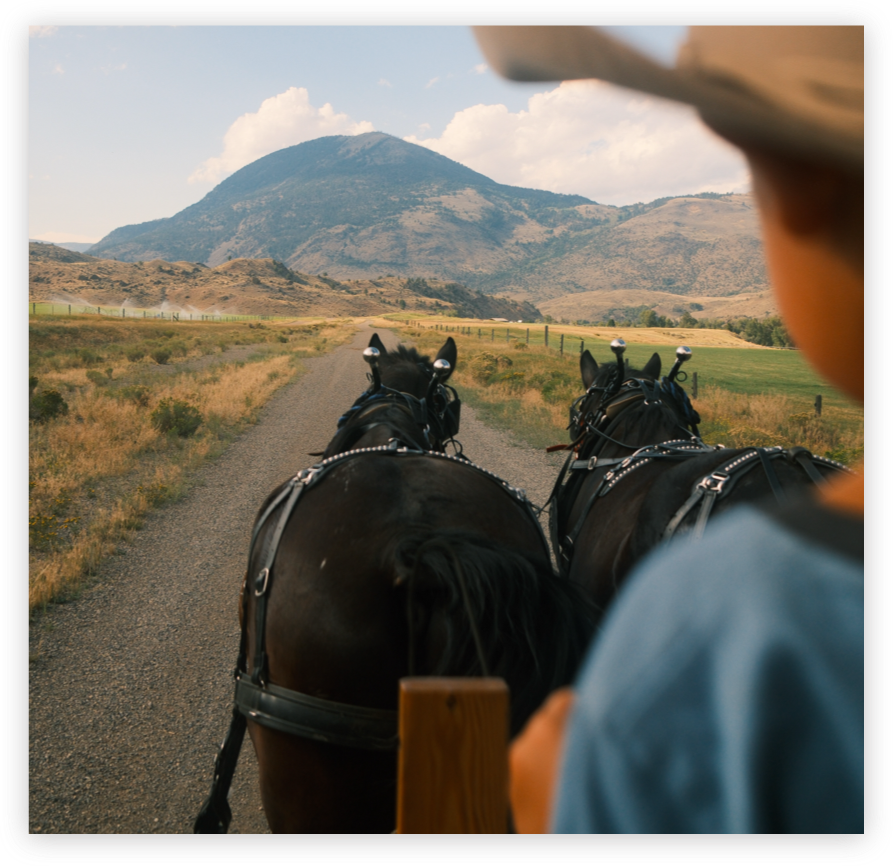
She’s quiet for a moment, looking out at her team of towering Percherons who will pull the wagon to her cookout in a few hours, her trucks and trailers lined up at the edge of the field, at the barn where her two goats stretch out in the shade.
“I hope they leave feeling like they were part of our life, not just customers passing through. Maybe it will change a 12-year-old girl's life, like it did for me.”
“I hope they leave feeling like they were part of our life, not just customers passing through. Maybe it will change a 12-year-old girl's life, like it did for me.”