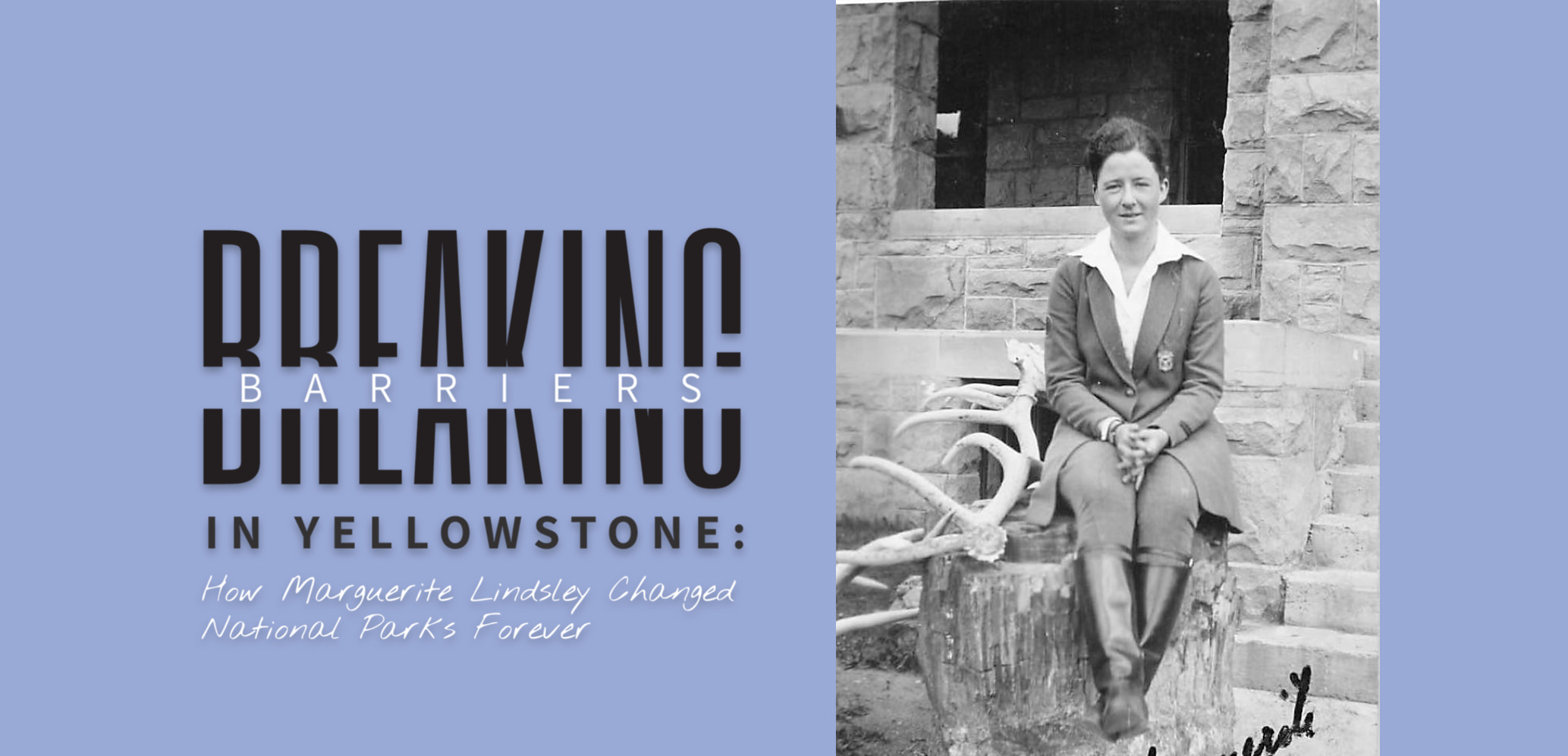
Marguerite Lindsley, August 18, 1927. Lindsley wears her permanent ranger uniform riding boots, breeches, badge, and approved alternative coat. PHOTO COURTESY OF THE ARNOLD FAMILY

By Sarah May
With the wind kissing her cheeks and brown hair blowing freely, Marguerite Lindsley was headed west on a 2,600-mile, seventeen-day trek atop her Harley Davidson motorcycle. Upon completion of her master’s degree in bacteriology at the University of Pennsylvania and an eight-month stint in clinical research in Philadelphia, Lindsley felt what many others have experienced: the tug of a life in Yellowstone country pulling at her heart. A young, single woman longing to return to her roots and do the work she felt called to do. The year was 1924, and Marguerite Lindsley was about to become a national park trailblazer.
Born October 2, 1901, in Mammoth Hot Springs, where her father, Chester Lindsley, worked. At the time, the park was still under military control. Her father played a pivotal role in establishing Yellowstone as a national park. First working for the army and later serving as acting Superintendent of Yellowstone with the Department of the Interior.
Born October 2, 1901, in Mammoth Hot Springs, where her father, Chester Lindsley, worked. At the time, the park was still under military control. Her father played a pivotal role in establishing Yellowstone as a national park. First working for the army and later serving as acting Superintendent of Yellowstone with the Department of the Interior.
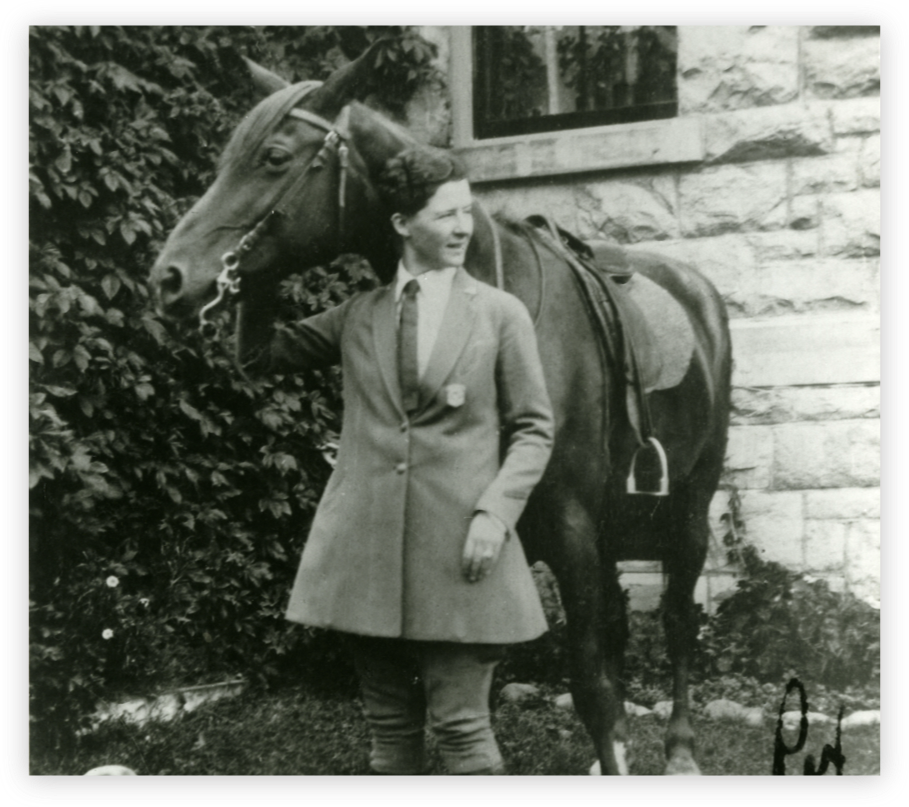
Permanent Ranger Marguerite “Peg” Lindsley and Rex the horse, at Yellowstone National Park, c. 1928-1931. PHOTO COURTESY OF NPS HISTORY COLLECTION
Lindsley spent her early years being homeschooled amid the backdrop of bison, geysers, and Yellowstone’s beauty—sparking a passion for nature, science, and the intersection between the two. Often found out in the wild drawing pictures of plants and animals in her trusty notebook, she would go on to pursue her love of science and nature at Montana State College in Bozeman before earning her master’s degree at the University Pennsylvania.
Like many who call the national parks home, Lindsley began her Yellowstone career in 1921 as a seasonal ranger, leading tours, working in the museum, and educating park visitors. Seasonal ranger work formed the backbone of the early National Park Service, requiring long hours, adaptability, and a deep knowledge of the landscape. In these roles, Lindsley balanced scientific understanding with a deep knowledge of the park, helping visitors make sense of Yellowstone’s geysers, wildlife, and geological features.
Like many who call the national parks home, Lindsley began her Yellowstone career in 1921 as a seasonal ranger, leading tours, working in the museum, and educating park visitors. Seasonal ranger work formed the backbone of the early National Park Service, requiring long hours, adaptability, and a deep knowledge of the landscape. In these roles, Lindsley balanced scientific understanding with a deep knowledge of the park, helping visitors make sense of Yellowstone’s geysers, wildlife, and geological features.
Being a young working woman in the 1920s came with its own set of challenges. Many high-ranking officials in the Department of the Interior believed women were unfit to serve as park rangers, leaving the agency unprepared to support female employees in the field.
Upon her hiring, Lindsley discovered a lack of ranger uniforms for women. Seeing a need, Lindsley designed her own version of the uniform, similar to that of her male counterparts. Using the iconic dark pine green rangers still wear, she fashioned a woman’s uniform fit for the job. Her female-fitting uniform would gain popularity as other female rangers used her patterns to create their own, adjusting the fit to their bodies and the work they were assigned.
The Christian Science Monitor would report on Lindsley’s seamstress skills and would describe her as:
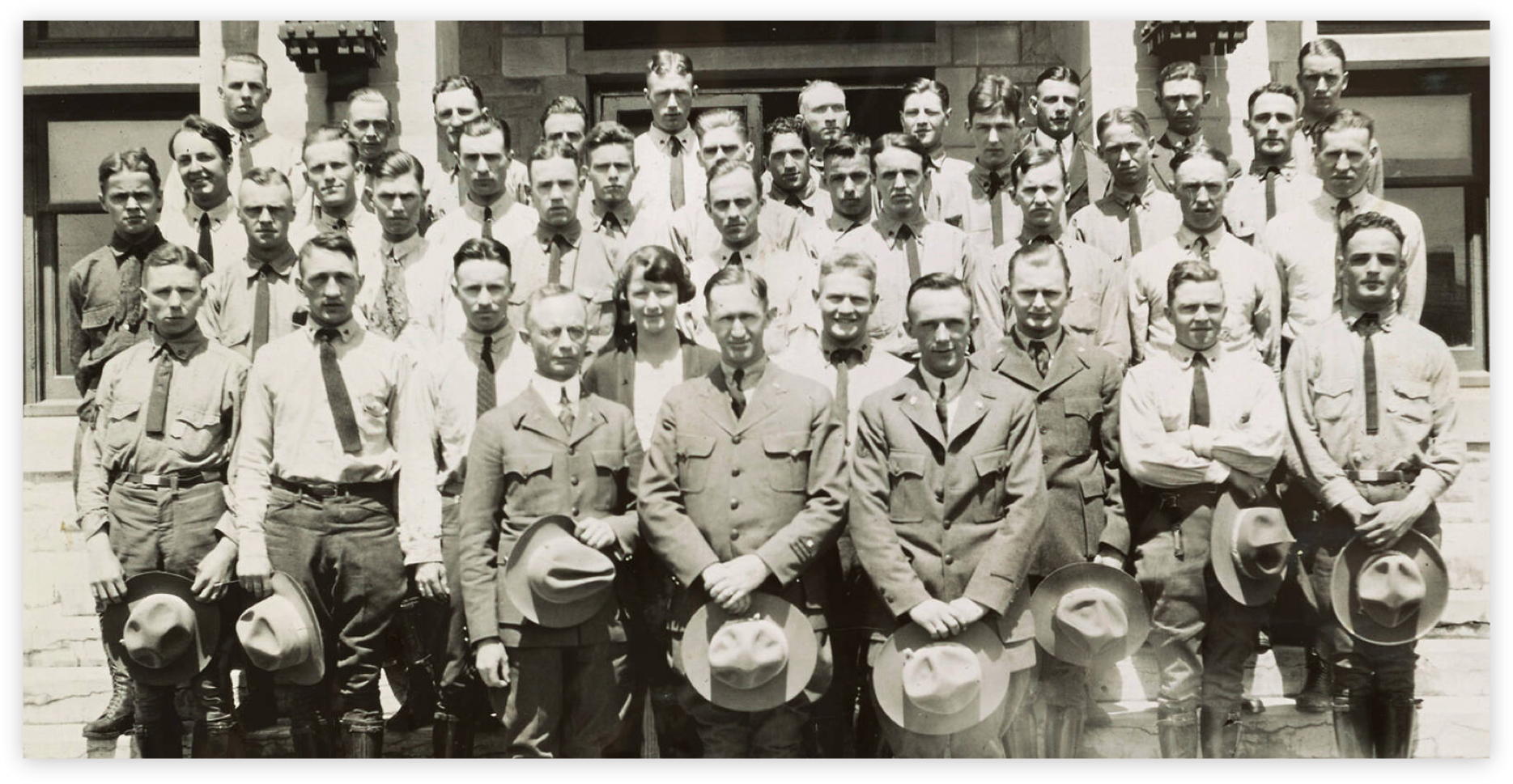
“......a tall, clear eyed, boyish-bobbed, slender young woman, trim in her well-fitting, olive-green uniform with its shining silver badge denoting that she is a member of the Department of Interior, National Park service, immaculate in her high-necked white blouse and black tie, ranger-like in her highly polished leather boots, it is no wonder that at first she was indistinguishable from the other 34 rangers.”
Though the number of women serving as park rangers was small, their presence marked a quiet but meaningful shift in the culture of the parks, laying the groundwork for broader opportunities for women in the years to come.
Upon her hiring, Lindsley discovered a lack of ranger uniforms for women. Seeing a need, Lindsley designed her own version of the uniform, similar to that of her male counterparts. Using the iconic dark pine green rangers still wear, she fashioned a woman’s uniform fit for the job. Her female-fitting uniform would gain popularity as other female rangers used her patterns to create their own, adjusting the fit to their bodies and the work they were assigned.
The Christian Science Monitor would report on Lindsley’s seamstress skills and would describe her as:
“......a tall, clear eyed, boyish-bobbed, slender young woman, trim in her well-fitting, olive-green uniform with its shining silver badge denoting that she is a member of the Department of Interior, National Park service, immaculate in her high-necked white blouse and black tie, ranger-like in her highly polished leather boots, it is no wonder that at first she was indistinguishable from the other 34 rangers.”
Though the number of women serving as park rangers was small, their presence marked a quiet but meaningful shift in the culture of the parks, laying the groundwork for broader opportunities for women in the years to come.
After a few summers of leading tours, out fishing the men, giving lectures to curious visitors, and sharing her wealth of knowledge with those eager to explore America’s first national park, she was appointed as the first full-time female park ranger in 1925, adding an embroidered acorn to her custom-made ranger uniform to designate her full-time status with the park. Her duties would expand to more leadership roles and working to enhance the visitor experience inside the park.
Before yellow snow coaches and buses shuttled visitors around the park, tours were done on horseback. On one three-week tour, she was leading a group on foot around Artist Paint Pot, where her leg suddenly broke through the dried crust into scorching hot mud. She would sustain third-degree burns and earn the nickname “Paint Pot Peg.” Not one to abandon her duties, she took it as a time to educate her group on the hazards of the park and wound care as they continued on their trip.
Before yellow snow coaches and buses shuttled visitors around the park, tours were done on horseback. On one three-week tour, she was leading a group on foot around Artist Paint Pot, where her leg suddenly broke through the dried crust into scorching hot mud. She would sustain third-degree burns and earn the nickname “Paint Pot Peg.” Not one to abandon her duties, she took it as a time to educate her group on the hazards of the park and wound care as they continued on their trip.
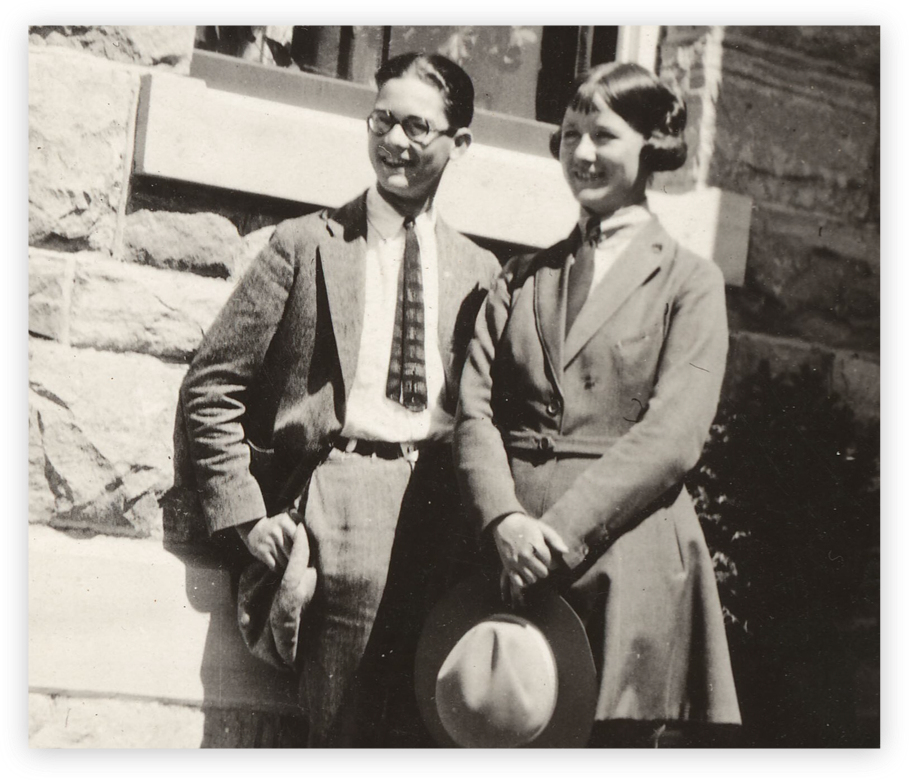
Ranger Marguerite Lindsley (right) in the prescribed uniform of a temporary ranger, including breeches, shirt, tie, and Stetson hat, c. 1921-1923. | PHOTO COURTESY OF YELLOWSTONE NATIONAL PARK (YELL 93081)
With winter serving as a quieter time in the park, Lindsley took that time to explore. Never one to shy away from a challenge in the great unknown, Lindsley embarked on a winter expedition with three others—a 143-mile circumnavigation of Yellowstone on skis.
In her journal, Lindsley described her life in Yellowstone as: “The deeper in its unspoiled wilderness we can be, the happier we are. Busy summers flew by on swift wings and no winter was half long enough.”
In 1928, Marguerite married fellow park ranger Ben Arnold and retired from her full-time ranger position, continuing instead as a summer ranger so that she and Arnold could work at the same posting. In 1932, they welcomed a son, William, and remained living at Tower Falls before later moving to the Northeast Entrance of the park. There, the family cared for orphaned animals and remained an integral part of Yellowstone life.
Marguerite “Peg” Arnold would pass away on May 18, 1952, at the young age of fifty after suffering complications from injuries sustained in a car accident. Her ashes were spread where they belonged, among the Yellowstone landscape. A small plaque can be seen today at the Mammoth Chapel honoring the life and legacy of Marguerite “Peg” Arnold. Her story and those of other women involved in Yellowstone can be seen at the “Women in Yellowstone” exhibit, featured at the Yellowstone Heritage and Research Center in Gardiner, which highlights the critical roles women played in the park’s history, including early rangers, homesteaders, and artists.
In her journal, Lindsley described her life in Yellowstone as: “The deeper in its unspoiled wilderness we can be, the happier we are. Busy summers flew by on swift wings and no winter was half long enough.”
In 1928, Marguerite married fellow park ranger Ben Arnold and retired from her full-time ranger position, continuing instead as a summer ranger so that she and Arnold could work at the same posting. In 1932, they welcomed a son, William, and remained living at Tower Falls before later moving to the Northeast Entrance of the park. There, the family cared for orphaned animals and remained an integral part of Yellowstone life.
Marguerite “Peg” Arnold would pass away on May 18, 1952, at the young age of fifty after suffering complications from injuries sustained in a car accident. Her ashes were spread where they belonged, among the Yellowstone landscape. A small plaque can be seen today at the Mammoth Chapel honoring the life and legacy of Marguerite “Peg” Arnold. Her story and those of other women involved in Yellowstone can be seen at the “Women in Yellowstone” exhibit, featured at the Yellowstone Heritage and Research Center in Gardiner, which highlights the critical roles women played in the park’s history, including early rangers, homesteaders, and artists.