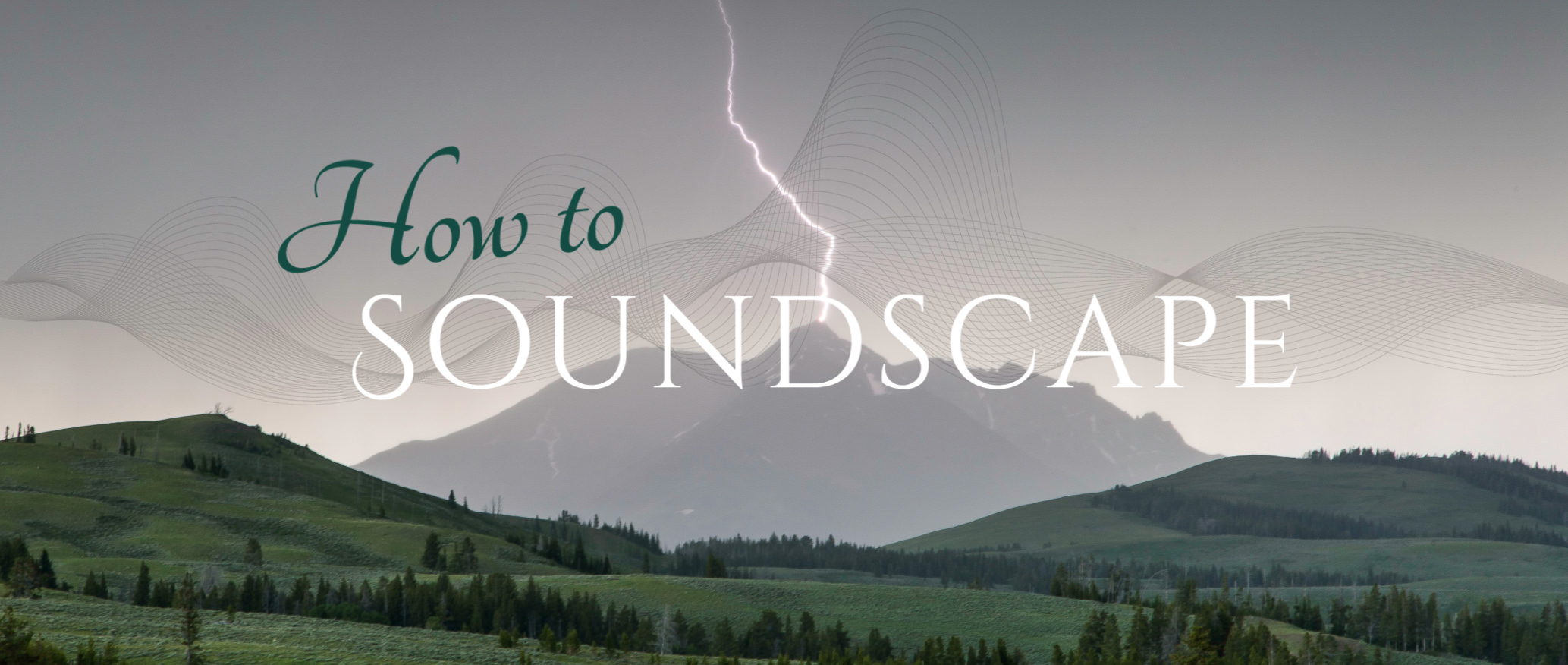
Thunderstorm at sunset, Swan Lake Flat Thunderstorm and lightning strike on Electric Peak; Photo by Neal Herbert; June 2015

By Leath Tonino
Soundscape is a noun, not a verb, and thus the above title is a mess—an intentional mess. Scientists and conservationists use the term to designate the acoustic environments within which all of us exist: think wolves howling in the Yellowstone backcountry, playing treble to the bass of an evening thunderstorm, a beaver’s slapping tail for percussion. But just because we reside in these rich, complex, omnidirectional soundscapes, it doesn’t mean we’re actually aware of them. Hence the need for a verb, an action word, a coinage—to soundscape.
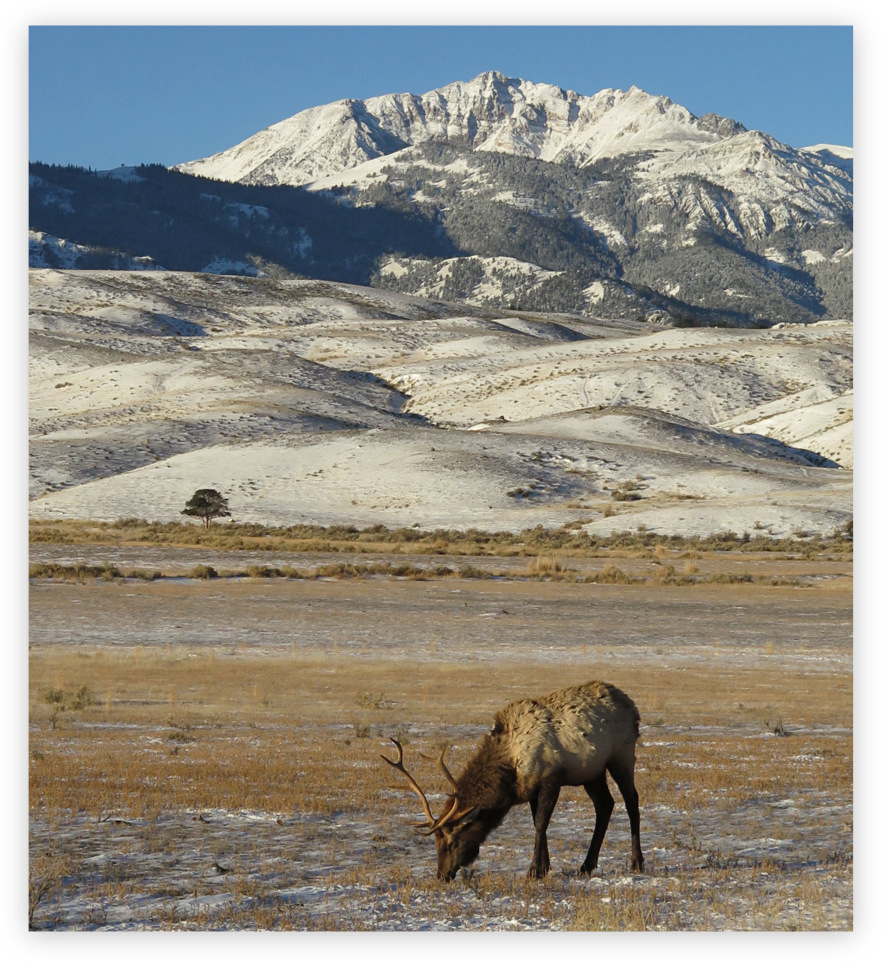
Bull elk near North Entrance and Electric Peak; Photo By Jim Peaco; November 2014
First, Remove Your Earbuds
Didn’t catch that? I said: REMOVE THOSE MISERABLE EARBUDS! Mozart is a genius. Ditto Aretha Franklin. But for once, please, unplug. If you want the following items on this list to be worth a damn, first you’ve got to embrace the more-than-human place as its own challenging, rewarding, full-bodied pastime.
Get Up Early, Stay Out Late
The dawn chorus, the dusk chorus—these are periods when dozens of species, birds especially, let ’er rip. There’s plenty to hear at any hour (owling is awesome), but twilight concerts provide an easy introduction to soundscaping. Additionally, dawn syncs with coffee, dusk with wine—beverages that, in the correct dosage, increase alertness and enthusiasm.
Close Your Eyes
Perhaps you’ve noticed that eyes are incredible and the sheer vibrant visibility of this planet is a miracle? And also that, well, you notice very little besides the visual when your eyes are freely exploring? A blindfold (bandanna, cap pulled low, etc.) will crank the volume, as it were. Relax into the darkness and see—no, hear—what transpires. I guarantee the chattering squirrels will chatter in a whole new way.
Enlarge Your Ears
Human ears aren’t particularly sensitive, not compared to those of dogs, cats, bats, moths, elephants, and porpoises. Here’s a trick for boosting receptivity: Cup your hands behind your ears, thereby forming bigger dishes. You will appear to passing strangers like a lunatic (Is that weirdo picking up signals from the mothership?), but you won’t care, because you’ll be transported.
Make Recordings
Years ago, I purchased a digital voice recorder to use as a journalist. The sweet surprise was that it drew me into a relationship with the voice of the wild. Attempting to capture a soundscape pricks your senses, puts you on tiptoes, induces a kind of hunter’s keen focus. And when you get home, you can re-appreciate the soundscape via humongous speakers, which is fun and deepens your study of the site’s nuances.
Return To The Same Spot
As landscapes change with seasons—green leaves, brown weeds, white drifts, yellow flowers—so too do soundscapes. Migrants arrive, depart, arrive again. Weather booms one day, whispers the next. If you return repeatedly to the same spot—for instance a comfy log-seat beside a pond—your attunement will grow. Ask yourself: What’s constant? What’s different? Consider marking your observations on a calendar.
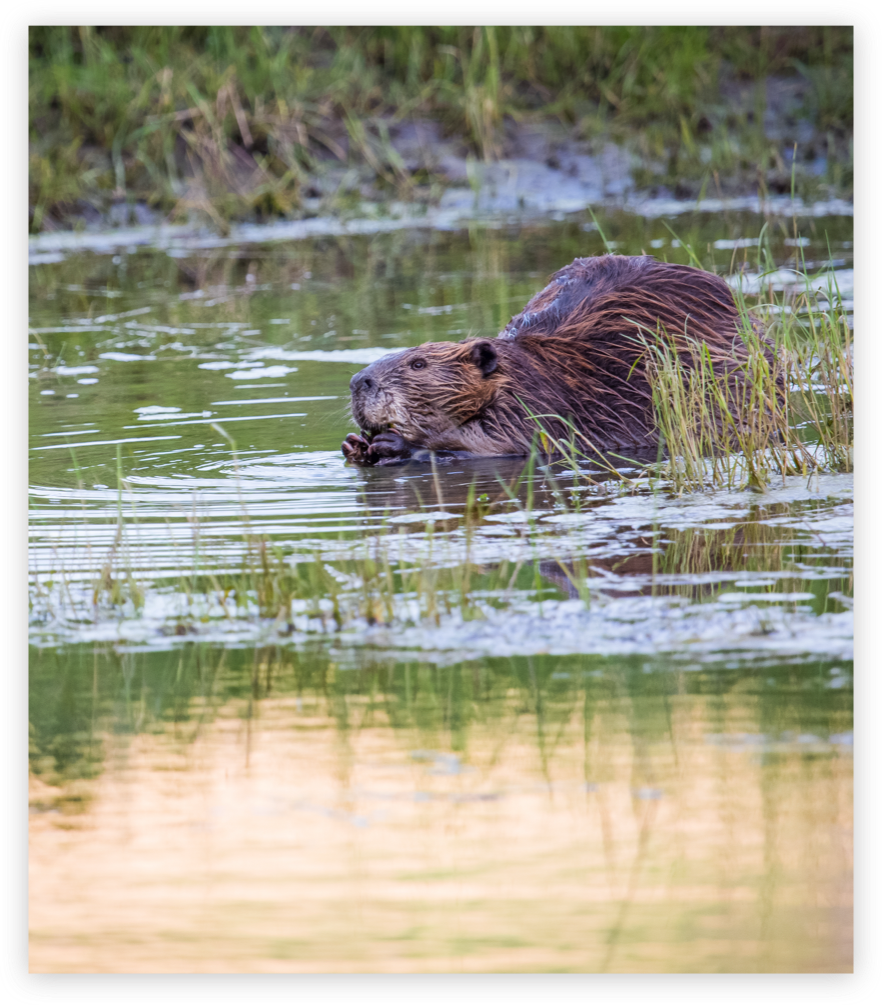
Beaver, Lamar River, NPS photo by Neal Herbert
Let It All In
Charismatic critters like bugling elk and trumpeting trumpeter swans are a treat, but they can distract us from abiotic wonders, such as tumbling rocks, dripping icicles, and soughing grasses. If you find yourself whining (Nothing happening this morning, not even a measly cricket!), it’s time to improve your game. Attend to those grasses, those icicles. Hang with a cliff and hear the grain-by-grain symphony of erosion.
Up The Inspiration
Interest in nature’s sonic side—the side missing from postcards and glossy calendars, shunned when a movie depicts a bald eagle but overdubs a red-tailed hawk’s hoarse cry—is on the rise. Inspiring resources abound: Bernie Krause’s book The Great Animal Orchestra, Gordon Hempton’s “One Square Inch” project, Richard Nelson’s archived radio program “Encounters,” and the National Park Service’s Natural Sounds Division website.
Mute Thyself
Zen meditators will tell you that sitting still and quieting the body is the simple part: it’s the mind that’s tough to mute. Yet without a hushed consciousness, we’re hard-pressed to receive the subtle clicks, whirs, gurgles, and boinks of this world. Don’t be discouraged. By some magic that I’ll never fully understand, the soundscapes themselves punch our pause button. We mostly just have to show up.
Join the Choir
It’s important to remember that humans are earthly beasts, native to many habitats, and not alien invaders. Accordingly, cooing grandmas, farting grandpas, granddaughters strumming guitars, and grandsons munching potato chips ought to be enjoyed along with yapping coyotes and splashing trout. Yes, the din of civilization frequently overwhelms yaps and splashes, but that’s not to say it must. Search for balance. After getting super quiet, try humming counterpoint.
Finally… Remove Those Miserable Earbuds!
Seriously, they’ve got to go. The rustling reeds and honking geese of an autumn marsh, the gentle drone of snow filtering through a valley’s million spruce—these aren’t soundtracks for the rest of our busy lives. Rather, they are our lives, the music of a moment, and another moment, and another moment. Or at least they can be.