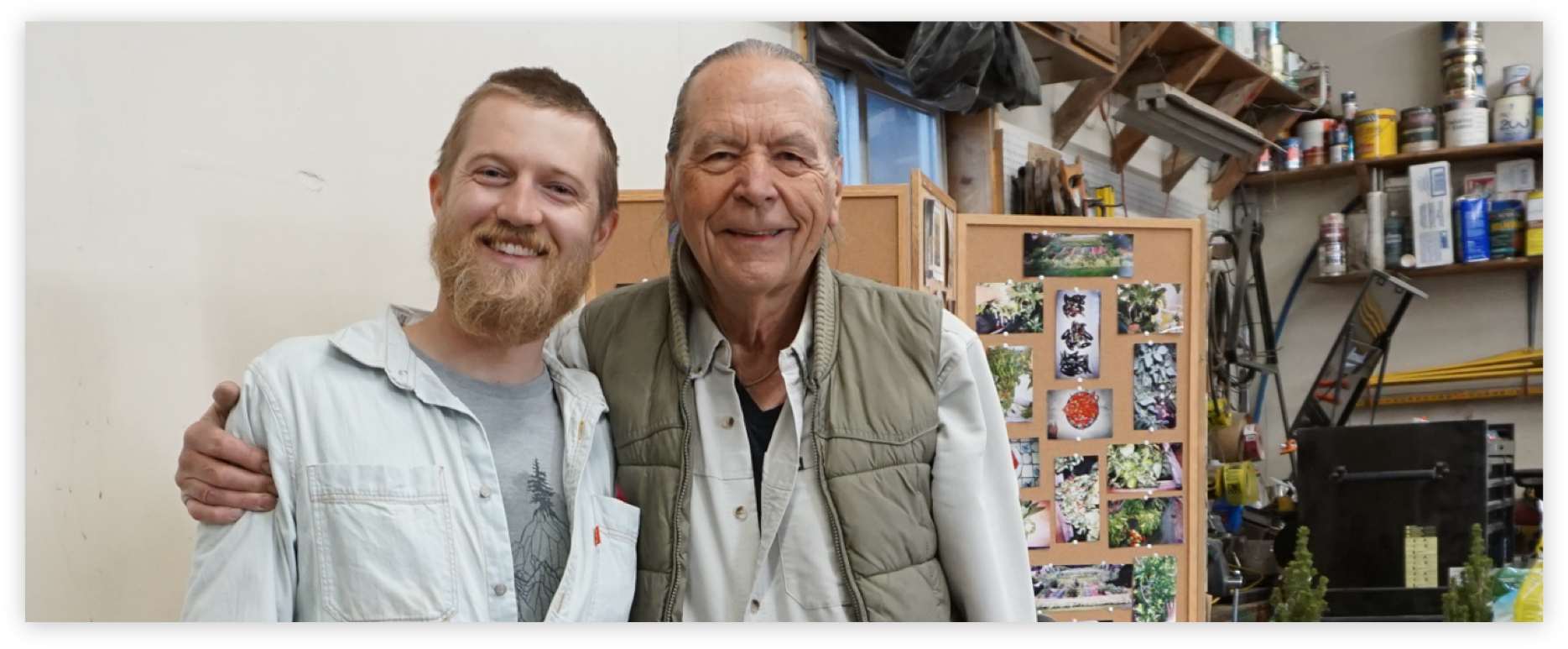
John and Charlie in John’s home sorting seeds and sharing stories Photos courtesy of Charlie Watt.

By Charlie Watt
“It’s nice to meet a young person who’s interested in tomatoes,” John Austin, longtime seed keeper and steward of a vast diversity of vegetable varieties, said.
Charlie Watt, founder of Homecoming Seeds of Northfield, Vermont, met Austin after giving a presentation about his tomato research to the Gallatin Gardener’s Club back in 2019. These words sparked a deep friendship between the two that would go on to cement Austin’s legacy of seed keeping in the manifestation of Homecoming Seeds, a bio-regionally adapted, farm-based seed company that launched their inaugural catalog in January 2026.
In the Gallatin Valley, at the northern edge of the Greater Yellowstone Ecosystem, gardening has always been an act of adaptation. Inspired by Austin’s humble and quiet work of keeping a diverse collection of open-pollinated seeds, Homecoming Seeds is built upon the lifework of Austin, who spent 45+ years keeping an astounding diversity of seeds in his basement in the foothills of the Bridger Mountains.
Everything starts with a seed, or so the saying goes, and, in this case, it was literally tomato seeds that connected these two passionate gardeners. After their initial meeting where Watt shared his findings on organic soil fertility in high tunnel tomato systems, part of his doctoral work at Montana State University, another garden club member walked up to Watt and said, “That’s John Austin. He has the best gardens in the valley, and his tomatoes are legendary. We should see if he’ll invite us over for a tour.”
Charlie Watt, founder of Homecoming Seeds of Northfield, Vermont, met Austin after giving a presentation about his tomato research to the Gallatin Gardener’s Club back in 2019. These words sparked a deep friendship between the two that would go on to cement Austin’s legacy of seed keeping in the manifestation of Homecoming Seeds, a bio-regionally adapted, farm-based seed company that launched their inaugural catalog in January 2026.
In the Gallatin Valley, at the northern edge of the Greater Yellowstone Ecosystem, gardening has always been an act of adaptation. Inspired by Austin’s humble and quiet work of keeping a diverse collection of open-pollinated seeds, Homecoming Seeds is built upon the lifework of Austin, who spent 45+ years keeping an astounding diversity of seeds in his basement in the foothills of the Bridger Mountains.
Everything starts with a seed, or so the saying goes, and, in this case, it was literally tomato seeds that connected these two passionate gardeners. After their initial meeting where Watt shared his findings on organic soil fertility in high tunnel tomato systems, part of his doctoral work at Montana State University, another garden club member walked up to Watt and said, “That’s John Austin. He has the best gardens in the valley, and his tomatoes are legendary. We should see if he’ll invite us over for a tour.”
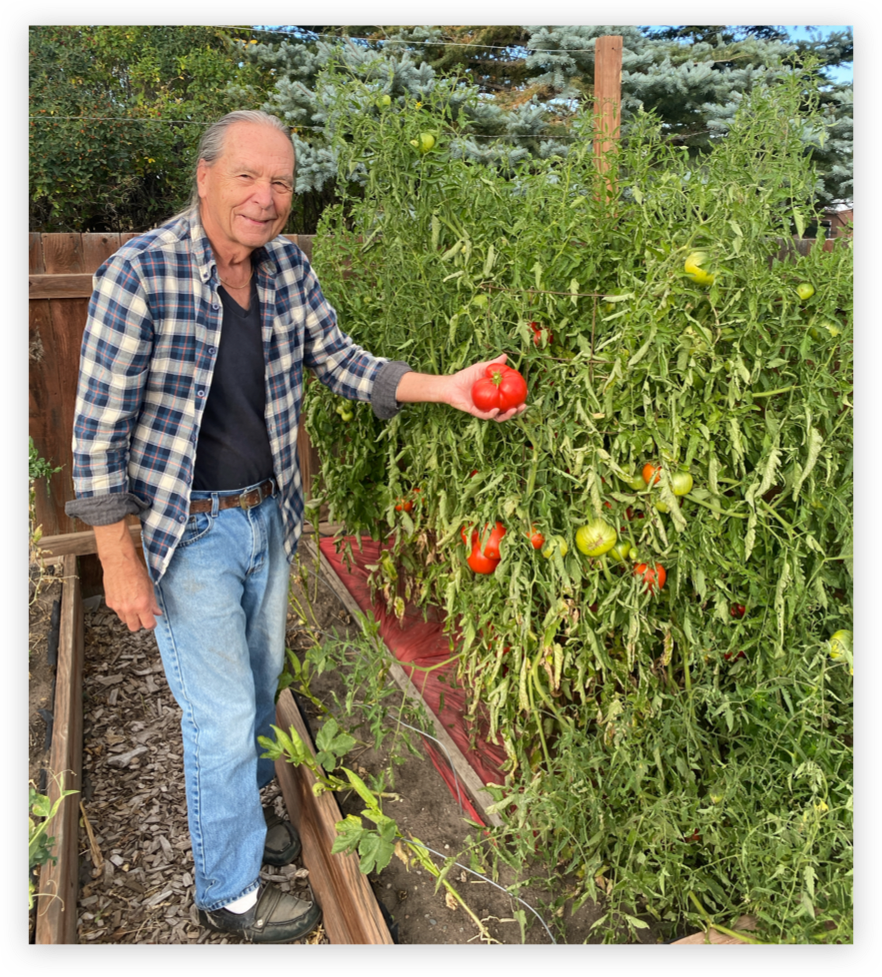
John in his garden. Photos courtesy of Charlie Watt.
In the years following their first encounter, Watt would visit Austin weekly. During the growing season, Watt would help in the garden and provide some muscle to Austin’s ever-ambitious gardening rituals, even as he approached and rounded 80 years of age.
In the winter, they would spend hours talking about seeds, their stories, and the personality of the different varieties that were kept and collected. Austin quickly became more than just a seed mentor to Watt. As Austin likes to say, they “could talk endlessly about life, the universe, and everything.”
Austin had three focus areas to his seed work. He saved seeds for bioregional adaptation. He curated the Tinsley House gardens at the Museum of the Rockies where he saved seeds that were historically accurate to the turn of the twentieth century. He also stewarded varieties of corn, beans, squash, and sunflowers that are native to the tribes in the Northern Great Plains. He did his best to recreate Buffalo Bird Woman’s gardens.
In the winter, they would spend hours talking about seeds, their stories, and the personality of the different varieties that were kept and collected. Austin quickly became more than just a seed mentor to Watt. As Austin likes to say, they “could talk endlessly about life, the universe, and everything.”
Austin had three focus areas to his seed work. He saved seeds for bioregional adaptation. He curated the Tinsley House gardens at the Museum of the Rockies where he saved seeds that were historically accurate to the turn of the twentieth century. He also stewarded varieties of corn, beans, squash, and sunflowers that are native to the tribes in the Northern Great Plains. He did his best to recreate Buffalo Bird Woman’s gardens.
It’s easy to overlook the importance of seeds when we consider our food system, as the plants and animals we harvest and eat are often what comes to mind first. However, seeds are the foundation of our food system. And as with all biological systems, diversity in our seed system conveys resilience.
But seeds are not just important as a basis of the nutritional and caloric needs of humans—seeds carry culture and stories that are vital to our sense of belonging and community wellbeing. The lives of people and plants are intimately intertwined, codependent. We remember who we are, individually and collectively, through our relationship with plants and seeds. These relationships feed us physically and spiritually. Who would we be without the foods, flavors, dishes that bring us “home”? And who would we be without the acknowledgement and celebration of those who came before us, carrying seeds and songs, reflecting the struggles and joys of the human experience so that we can feed ourselves today?
The memory of our ancestors is carried by the seeds we sow today. Seeds bring us home.
But seeds are not just important as a basis of the nutritional and caloric needs of humans—seeds carry culture and stories that are vital to our sense of belonging and community wellbeing. The lives of people and plants are intimately intertwined, codependent. We remember who we are, individually and collectively, through our relationship with plants and seeds. These relationships feed us physically and spiritually. Who would we be without the foods, flavors, dishes that bring us “home”? And who would we be without the acknowledgement and celebration of those who came before us, carrying seeds and songs, reflecting the struggles and joys of the human experience so that we can feed ourselves today?
The memory of our ancestors is carried by the seeds we sow today. Seeds bring us home.
It will not come as a surprise that our current food system is unsustainable. Seed industry consolidation and biodiversity loss has made our system fragile and vulnerable to disruption. We can remember how COVID-19 led to seed shortages and food chain disruptions that increased food insecurity. We are called to work towards a decentralized local and regional seed system that emphasizes adapted seeds and centers the role seeds play in culture and community vitality.
The loss of seed diversity threatens the lineage of Native American culture who continue to be examples of sustainable inhabitance in our landscapes. Diversity loss also threatens our memory of the foodways of early settlers in the Gallatin Valley. While these stories include themes of violence and erasure through colonization, they need to be remembered so we know from where we come and how seeds and plants have always been loyal in their commitment to feeding us.
The loss of seed diversity threatens the lineage of Native American culture who continue to be examples of sustainable inhabitance in our landscapes. Diversity loss also threatens our memory of the foodways of early settlers in the Gallatin Valley. While these stories include themes of violence and erasure through colonization, they need to be remembered so we know from where we come and how seeds and plants have always been loyal in their commitment to feeding us.
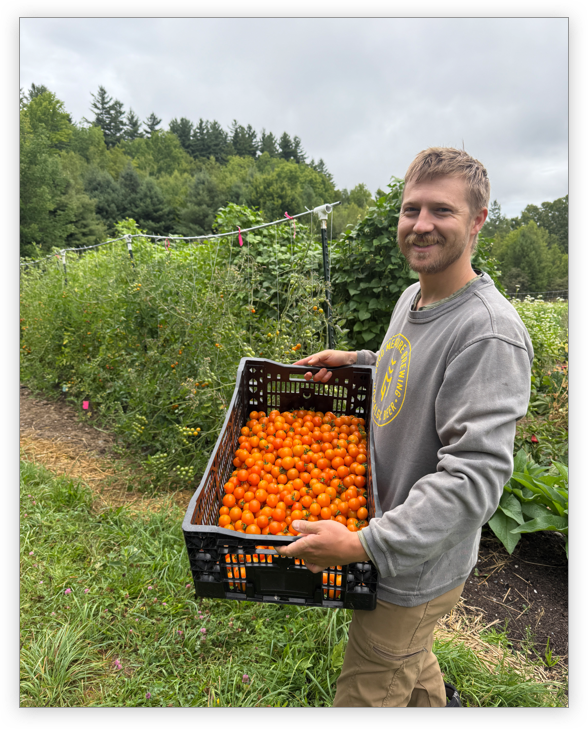
Charlie on his farm in Vermont harvesting tomatoes to be processed for seed.
Photo courtesy of Charlie Watt
Photo courtesy of Charlie Watt
Austin recognized the importance of these seeds to the cultural integrity of the Gallatin Valley. His commitment to the curation of Tinsley House gardens down to the specific varieties that were grown from 1890 to 1910 has filled important gaps in the heritage of early white inhabitants of this valley, who relied on gardening for sustenance. And perhaps more importantly, Austin’s dedication to recovering Native varieties of corn, beans, squash, and sunflowers to the tribes of the Northern Great Plains, has been an important link in supporting Native communities today to take back their own path to food sovereignty. His collection of corn, beans, squash, and sunflowers were rematriated through the Montana Indigenous Food Sovereignty Initiative in 2021 where they now connect with their original stewards to whom the seeds belong.
The third collection that Austin curated are bioregionally adapted seeds — seeds selected to thrive in a specific landscape. In the Gallatin Valley, on the northern edge of the Greater Yellowstone Ecosystem, cold nights, high elevation, and unpredictable spring and fall frosts make this work especially important. Vegetables such as tomatoes, squash, and melons, which evolved closer to the equator, are constrained by short frost-free windows and limited heat accumulation. Many of these warm-season crops require long days to maturity and sustained warmth, making careful variety selection essential for success in this region.
This is where Homecomings Seeds has picked up where Austin left off. Watt is now using Austin’s collection of bioregionally adapted seeds as the foundation of his new seed company. This is part of what makes Homecoming Seeds so special. Austin has spent over 45 years selecting for cold hardiness, early maturity, and resilience to the challenging growing conditions found in Montana’s Gallatin Valley. He was legendary for how productive his gardens were so early in the year. While growing in central Vermont has many similarities to the growing in the northern Rockies, it also has many differences, namely: soil types, precipitation patterns, and humidity levels. Watt expects some varieties to translate well to Vermont while others may not. Watt is also working with other long time seed keepers in Vermont and New England to build a catalog that is expressive of cold, northern latitudes in the United States.
Another distinction of Homecoming Seeds is their transparency. When you buy seeds from large companies, it’s hard or impossible to know where the seeds were grown. Homecoming Seeds is a farm-based seed company – meaning most seeds in their catalog are grown on their home farm. If not grown by them, they’re grown by farmers in the same bioregion who are also committed to strengthening local seed systems and adapting plants to northern climates. And they tell you right on the website where the seeds come from.
When you encounter the Bozeman Watermelon, Candy Mountain Sweet Corn, or varieties of Austin’s famous tomatoes in the Homecoming Seeds catalog, know that these — like most of their offerings — were tested and selected to grow well and taste good in places like the Gallatin Valley.
This region shaped these seeds — and those seeds now carry this place elsewhere.
The third collection that Austin curated are bioregionally adapted seeds — seeds selected to thrive in a specific landscape. In the Gallatin Valley, on the northern edge of the Greater Yellowstone Ecosystem, cold nights, high elevation, and unpredictable spring and fall frosts make this work especially important. Vegetables such as tomatoes, squash, and melons, which evolved closer to the equator, are constrained by short frost-free windows and limited heat accumulation. Many of these warm-season crops require long days to maturity and sustained warmth, making careful variety selection essential for success in this region.
This is where Homecomings Seeds has picked up where Austin left off. Watt is now using Austin’s collection of bioregionally adapted seeds as the foundation of his new seed company. This is part of what makes Homecoming Seeds so special. Austin has spent over 45 years selecting for cold hardiness, early maturity, and resilience to the challenging growing conditions found in Montana’s Gallatin Valley. He was legendary for how productive his gardens were so early in the year. While growing in central Vermont has many similarities to the growing in the northern Rockies, it also has many differences, namely: soil types, precipitation patterns, and humidity levels. Watt expects some varieties to translate well to Vermont while others may not. Watt is also working with other long time seed keepers in Vermont and New England to build a catalog that is expressive of cold, northern latitudes in the United States.
Another distinction of Homecoming Seeds is their transparency. When you buy seeds from large companies, it’s hard or impossible to know where the seeds were grown. Homecoming Seeds is a farm-based seed company – meaning most seeds in their catalog are grown on their home farm. If not grown by them, they’re grown by farmers in the same bioregion who are also committed to strengthening local seed systems and adapting plants to northern climates. And they tell you right on the website where the seeds come from.
When you encounter the Bozeman Watermelon, Candy Mountain Sweet Corn, or varieties of Austin’s famous tomatoes in the Homecoming Seeds catalog, know that these — like most of their offerings — were tested and selected to grow well and taste good in places like the Gallatin Valley.
This region shaped these seeds — and those seeds now carry this place elsewhere.