
By Fischer Genau
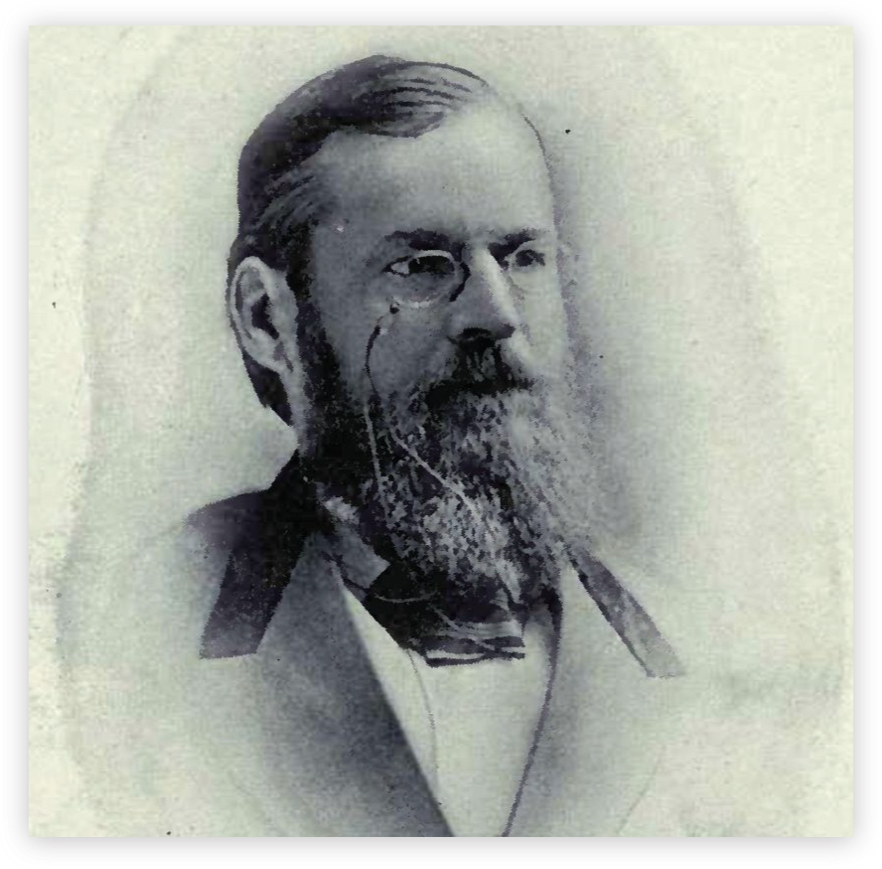
Photo of Everts published in The Discovery of Yellowstone Park (1870).
Truman C. Everts, at the age of 53, was a man of little consequence. He was a desk jockey working as the surveyor for the Montana territory, and he was a widower, with a dead wife in the ground somewhere back in Massachusetts. Truman had few notable qualities aside from a long bushy beard and a real fondness for stories of the wild. It was this second quality that would eventually lead him on the adventure that came to define his life, for in his 54th year, our man Truman forever etched his name into the annals of the history of Yellowstone National Park.
Here is his story.
It all started in the spring of 1870, when Truman got wind of an expedition into the interior of a virgin Yellowstone. At that point, only natives, trappers, and one party of three men had traversed the region, and the stories that made their way back to Helena told of fountains of boiling water, mountains of glass, and canyons a thousand feet deep.
These “most marvelous accounts” had captured Truman’s imagination, and when his acquaintance Nathaniel P. Langford, who worked as the U.S. collector of internal revenue for Montana, told him that he was helping organize the biggest mission yet into Yellowstone’s interior, naturally Truman was quite taken with the idea.
Here is his story.
It all started in the spring of 1870, when Truman got wind of an expedition into the interior of a virgin Yellowstone. At that point, only natives, trappers, and one party of three men had traversed the region, and the stories that made their way back to Helena told of fountains of boiling water, mountains of glass, and canyons a thousand feet deep.
These “most marvelous accounts” had captured Truman’s imagination, and when his acquaintance Nathaniel P. Langford, who worked as the U.S. collector of internal revenue for Montana, told him that he was helping organize the biggest mission yet into Yellowstone’s interior, naturally Truman was quite taken with the idea.
Our man Truman was in between jobs at the time, having been relieved of his post by President Ulysses S. Grant after John Wilkes Booth put a bullet through Lincoln’s head, and he was in desperate need of something to do. I like to imagine him sitting in his study, taking a long draw from a cigar and tut-tutting as he exhales and says: “Ahhh adventure, fair maiden of my youth, it’s been too long since we’ve danced you and I. Now, I’ll admit I am getting a little long in the tooth…but I think this might be exactly what the doctor ordered. A bit of fresh air, new sights, perhaps an invigorating run in with a native or a brown bear. Yes, yes, I think a trip to the interior is just what I need.”
So Truman told his pal Langford that he wanted to join. Now Truman had grown up comfortably in New England and spent most of his life as a desk jockey and bureaucrat, and he had almost no outdoor experience or survival skills. In fact, he was nearsighted, and he wore glasses almost every day of his life (without them, he had trouble making out shapes in the distance, which I assume made wilderness navigation difficult.) And yet, the expedition took him on. What kind of screening process the group had, I’m really not sure—perhaps a few manly push-ups and a friendly game of darts—but regardless, Truman was bound for Yellowstone.
That summer, as the departure date of August 16 neared, Truman tidied up his personal affairs, gave his only child and young daughter Bessie a peck on the head (I assume), secured some form of childcare, and rendezvoused with his company. The entire expedition set out from Fort Ellis on August 22, 19 men on horseback, and their party included a judge, a future Montana governor, an army sergeant, and two African American cooks, Nute and Johnny.
So Truman told his pal Langford that he wanted to join. Now Truman had grown up comfortably in New England and spent most of his life as a desk jockey and bureaucrat, and he had almost no outdoor experience or survival skills. In fact, he was nearsighted, and he wore glasses almost every day of his life (without them, he had trouble making out shapes in the distance, which I assume made wilderness navigation difficult.) And yet, the expedition took him on. What kind of screening process the group had, I’m really not sure—perhaps a few manly push-ups and a friendly game of darts—but regardless, Truman was bound for Yellowstone.
That summer, as the departure date of August 16 neared, Truman tidied up his personal affairs, gave his only child and young daughter Bessie a peck on the head (I assume), secured some form of childcare, and rendezvoused with his company. The entire expedition set out from Fort Ellis on August 22, 19 men on horseback, and their party included a judge, a future Montana governor, an army sergeant, and two African American cooks, Nute and Johnny.
18 days later, Truman got lost.
While picking his way through a wash of fallen pine trees, our man Truman got separated from his companions, and when he finally made it to the other side, he took off in the wrong direction. While separated, Truman kept his cool, later writing that he “had no doubt of being with the party at breakfast the next morning.” But he didn’t find them the next morning, and his second day alone, Truman’s horse bolted after he dismounted to choose his path. That night, without the company of his horse nor blankets or matches to start a fire, Truman’s naturally sunny disposition started to fray.
Truman admitted to being “naturally timid in the night,” (or, as I like to say, afraid of the dark), and he wrote that during that second night “the forest seemed alive with the screeching of night birds, the angry barking of coyotes, and the prolonged, dismal howl of the gray wolf.” These sounds were “full of terror” for Truman and “drove slumber from my eyelids.”
While picking his way through a wash of fallen pine trees, our man Truman got separated from his companions, and when he finally made it to the other side, he took off in the wrong direction. While separated, Truman kept his cool, later writing that he “had no doubt of being with the party at breakfast the next morning.” But he didn’t find them the next morning, and his second day alone, Truman’s horse bolted after he dismounted to choose his path. That night, without the company of his horse nor blankets or matches to start a fire, Truman’s naturally sunny disposition started to fray.
Truman admitted to being “naturally timid in the night,” (or, as I like to say, afraid of the dark), and he wrote that during that second night “the forest seemed alive with the screeching of night birds, the angry barking of coyotes, and the prolonged, dismal howl of the gray wolf.” These sounds were “full of terror” for Truman and “drove slumber from my eyelids.”
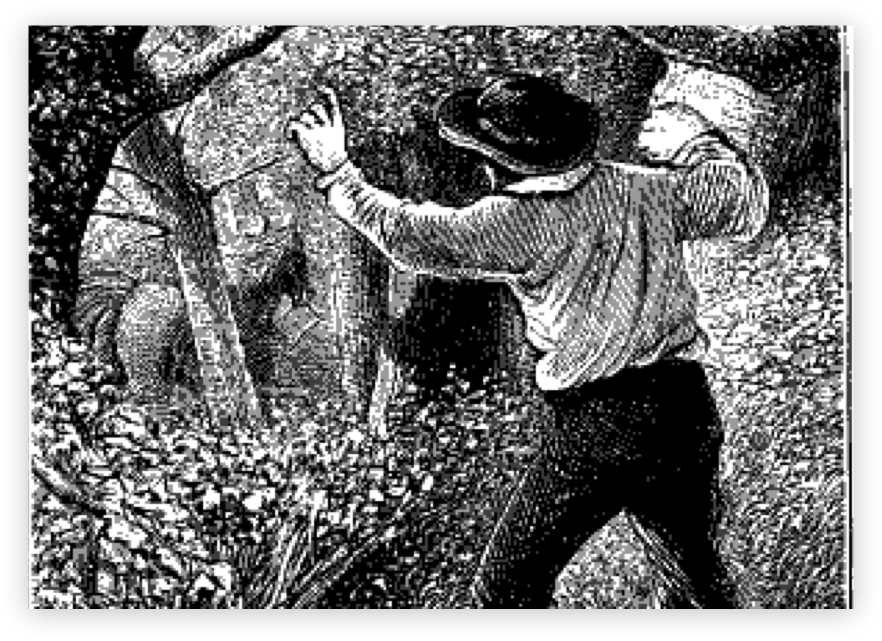
Truman Everts loses his horse, starting his perilous survival story. Photo Credit Project Gutenberg
The next morning, Truman’s great adventure had really broken down. He woke up tired, hungry, and alone, and these feelings would become close companions over the next several weeks. Truman didn’t find his party that day, nor the next, nor the next, even though they were looking for him the whole time. Instead, Truman went from one misadventure to another, and the daily task of survival became more and more grim with each lonely night.
On the third day, Truman encountered a mountain lion. He was resting beneath a tree when he heard the cat’s shrill scream, and the danger he was in struck him immediately. He yelled back and swung himself up into the tree he’d been resting by, scrambling up high into the tree’s uppermost branches. From his perch, he endured a tense standoff with the mountain lion, screaming at it and hurling branches down, but to no avail. Eventually he gave up and sat mute, until the animal “ran screaming into the forest.”
When he returned to the base of his tree, a storm hit, and Truman spent two days shivering beneath dug up earth and tree limbs. His only food in that period was a small songbird that wandered within reach of his hungry hands and that he ate raw after plucking its feathers. A few days after that, Truman burned himself badly on a hot spring that scalded his thigh, and from that point on he had to sleep sitting up, one night falling face first into his fire and burning his hand.
On the third day, Truman encountered a mountain lion. He was resting beneath a tree when he heard the cat’s shrill scream, and the danger he was in struck him immediately. He yelled back and swung himself up into the tree he’d been resting by, scrambling up high into the tree’s uppermost branches. From his perch, he endured a tense standoff with the mountain lion, screaming at it and hurling branches down, but to no avail. Eventually he gave up and sat mute, until the animal “ran screaming into the forest.”
When he returned to the base of his tree, a storm hit, and Truman spent two days shivering beneath dug up earth and tree limbs. His only food in that period was a small songbird that wandered within reach of his hungry hands and that he ate raw after plucking its feathers. A few days after that, Truman burned himself badly on a hot spring that scalded his thigh, and from that point on he had to sleep sitting up, one night falling face first into his fire and burning his hand.
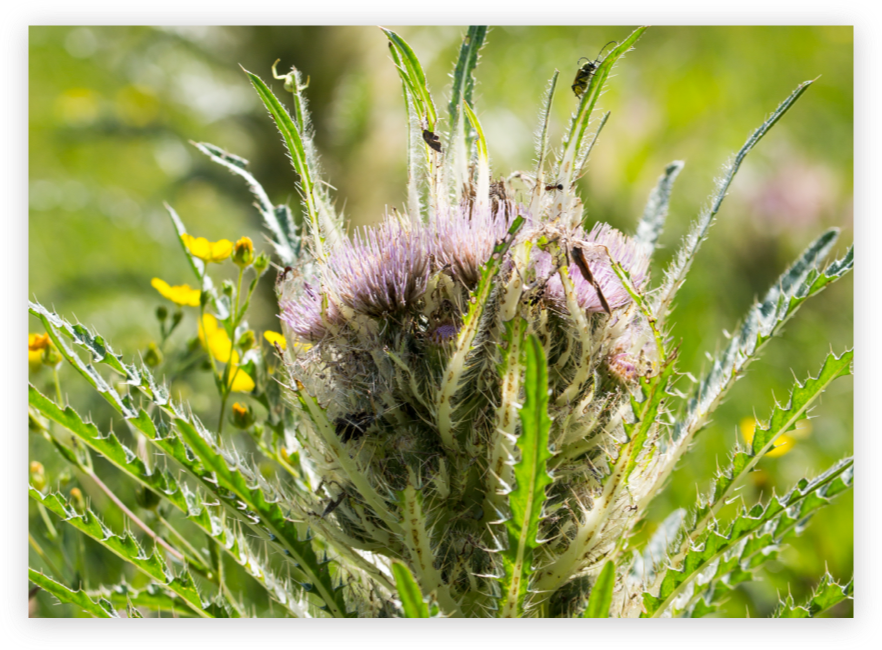
Everts thistle (Cirsium scariosum), Mammoth Hot Springs. Photo Credit NPS / Neal Herbert
And yet, through each trial, our man Truman carried on. On his third day of no food, he found he could eat the thistle roots that grew plentifully around Yellowstone Lake (“Eureka! I had found food”). Faced with hypothermia, he sought out hot springs and slept on the ground near them for warmth. During his stay at the springs, Truman found a “small, round, boiling spring” that he cooked his roots in and called his “dinner-pot.” And, after getting burned by a jet of hot air and in desperate need of another way to keep warm, Truman had his Prometheus moment. A gleam of reflected sunshine off the lake inspired Truman to try using his opera-glasses, which had remained with him, to “get fire from Heaven.” He directed the sun’s rays at a piece of dry wood in his hand, and within seconds a tongue of smoke curled skywards. Truman was elated, and he said to himself, “I will not despair.” This was one of the refrains that kept him going in the weeks to come. Wilderness skills be damned, our man Truman was determined to make it.
In “Thirty-Seven Days of Peril,” Truman’s first-person account of his survival, he reflected on what he thought kept him alive throughout those five weeks:
I recollect at this time discussing the question, whether there was not implanted by Providence in every man a principle of self-preservation equal to any emergency which did not destroy his reason. I decided this question affirmatively a thousand times afterwards in my wanderings, and I record this experience here, that any person who reads it, should he ever find himself in like circumstances, may not despair. There is life in the thought. It will revive hope, allay hunger, renew energy, encourage perseverance, and, as I have proved in my own case, bring a man out of difficulty, when nothing else can avail.
I think Truman is generous to identify in “every man” (though he notably does not extend this quality to women) the self-preservation that carried him through his dark night of the soul. As I read his account, there were numerous places where I imagined I might rather just plop down, give up, and die rather than go on surviving with no guarantee of rescue and prolong my suffering. Truman did, occasionally, give in to self-pity and momentary despair. But he kept going, kept starving, kept freezing, kept falling down and dusting himself off, and kept tripping his way into the next exquisitely painful experience. It wasn’t all agony, however.
I recollect at this time discussing the question, whether there was not implanted by Providence in every man a principle of self-preservation equal to any emergency which did not destroy his reason. I decided this question affirmatively a thousand times afterwards in my wanderings, and I record this experience here, that any person who reads it, should he ever find himself in like circumstances, may not despair. There is life in the thought. It will revive hope, allay hunger, renew energy, encourage perseverance, and, as I have proved in my own case, bring a man out of difficulty, when nothing else can avail.
I think Truman is generous to identify in “every man” (though he notably does not extend this quality to women) the self-preservation that carried him through his dark night of the soul. As I read his account, there were numerous places where I imagined I might rather just plop down, give up, and die rather than go on surviving with no guarantee of rescue and prolong my suffering. Truman did, occasionally, give in to self-pity and momentary despair. But he kept going, kept starving, kept freezing, kept falling down and dusting himself off, and kept tripping his way into the next exquisitely painful experience. It wasn’t all agony, however.
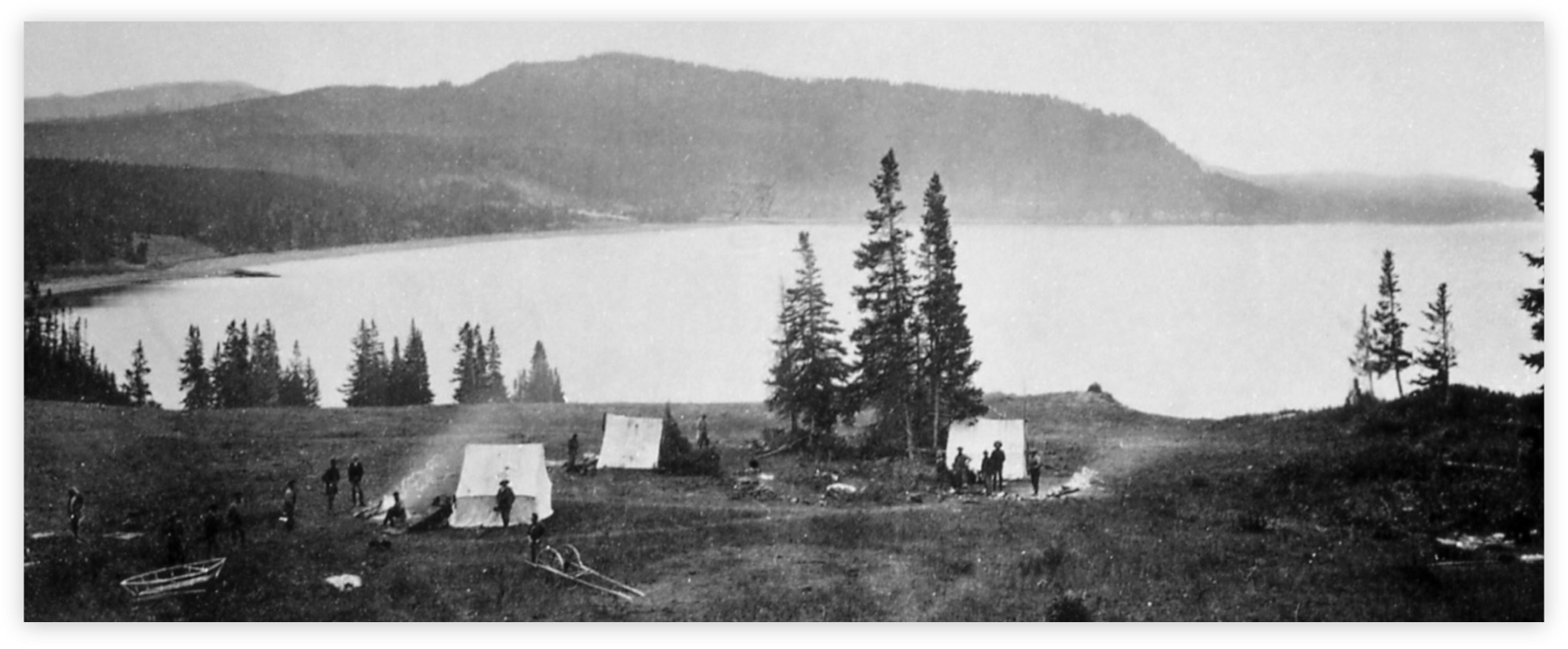
[CAMP PHOTO ON YELLOWSTONE LAKE] The Hayden expedition, the first federally funded survey of the Yellowstone region, camped out on the north shore of Yellowstone Lake in 1871, a year after Truman’s fateful journey. PHOTO BY WILLIAM H. JACKSON/YELLOWSTONE NATIONAL PARK
When Truman first arrived at Yellowstone Lake, he called it “one of the grandest landscapes” he’d ever beheld. The lake sparkled blue, the mountains shot up from beyond the water’s edge, and steam from a thousand hot springs hung over the scene with a single geyser pouring up into the sky in the distance. The animals there were surprised at the appearance of this strange, bipedal creature, but they didn’t run. Instead, Truman watched otters dance through the water and swans glide across its surface. He locked eyes with deer, elk and mountain sheep, and he listened to the birds singing to each other. Truman also remarked that he wished some of his friends could see what he was seeing, which he thought was probably being beheld by mortal eyes for the first time, even though the Shoshone, Blackfeet, and other tribes had traveled that land for generations.
The Yellowstone that Truman peered out on was different, despite the valiant attempts to protect it, than the Yellowstone we visit today. Those animals didn’t know constant human company. They’d never seen roads or trail signs. It was their land back then, and Truman was only a visitor, lonely and vulnerable and (almost) at the complete mercy of Mother Nature.
Several days after his discovery of fire, Truman was back on the banks of Yellowstone Lake, rooting through an old campsite left by his party. All he found was a forgotten fork and a discarded yeast-powder can, and, dejected, Truman used the afternoon sun to make fire and carried it back to a camping spot in the trees on a burning stick. There, he got a proper blaze going and took shelter from a vicious wind beneath a canopy of pine branches.
When he woke up, his shelter was on fire. By the time he escaped the flames, his left hand was crisped and most of his hair had burnt off, and he stood by the edge of the lake and watched as the wildfire he’d started ripped through the forest.
An immense sheet of flame, following to their tops the lofty trees of an almost impenetrable pine forest, leaping madly from top to top, and sending thousands of forked tongues a hundred feet or more athwart the midnight darkness…fills the beholder with mingled feelings of awe and astonishment. I never before saw anything so terribly beautiful…The roaring, cracking, crashing, and snapping of falling limbs and burning foliage was deafening. On, on, on traveled the destructive element, until it seemed as if the whole forest was enveloped in flame.
The Yellowstone that Truman peered out on was different, despite the valiant attempts to protect it, than the Yellowstone we visit today. Those animals didn’t know constant human company. They’d never seen roads or trail signs. It was their land back then, and Truman was only a visitor, lonely and vulnerable and (almost) at the complete mercy of Mother Nature.
Several days after his discovery of fire, Truman was back on the banks of Yellowstone Lake, rooting through an old campsite left by his party. All he found was a forgotten fork and a discarded yeast-powder can, and, dejected, Truman used the afternoon sun to make fire and carried it back to a camping spot in the trees on a burning stick. There, he got a proper blaze going and took shelter from a vicious wind beneath a canopy of pine branches.
When he woke up, his shelter was on fire. By the time he escaped the flames, his left hand was crisped and most of his hair had burnt off, and he stood by the edge of the lake and watched as the wildfire he’d started ripped through the forest.
An immense sheet of flame, following to their tops the lofty trees of an almost impenetrable pine forest, leaping madly from top to top, and sending thousands of forked tongues a hundred feet or more athwart the midnight darkness…fills the beholder with mingled feelings of awe and astonishment. I never before saw anything so terribly beautiful…The roaring, cracking, crashing, and snapping of falling limbs and burning foliage was deafening. On, on, on traveled the destructive element, until it seemed as if the whole forest was enveloped in flame.
Spurred on by the wind, the fire was relentless, swallowing up trees, shrubs, and all the creatures of the forest that couldn’t outrun the flames and leaving a trail of black devastation in its wake. Afterwards, Truman wrote that “Among the disasters of this fire, there was none I felt more seriously than the loss of my buckle-tongue knife, my pin fish-hook, and tape fish-line,” which were items he had fashioned out of his meager supplies.
Not long after the fire, our man Truman began to hallucinate. He was about to attempt a climb over the Madison Range and into the neighboring valley when he was visited by an old friend of his that had always given good advice. The friend told him he should turn back immediately, and he was right. By that point, Truman had been alone for four weeks, was covered in swelling burns, and his body was starting to break down. The thistle roots that had sustained him all that time had locked up his digestive tract, and “their fibres were packed in it a matted, compact mass.” A climb into the mountains to try to reach Virginia City just 70 miles away would have killed him.
Not long after the fire, our man Truman began to hallucinate. He was about to attempt a climb over the Madison Range and into the neighboring valley when he was visited by an old friend of his that had always given good advice. The friend told him he should turn back immediately, and he was right. By that point, Truman had been alone for four weeks, was covered in swelling burns, and his body was starting to break down. The thistle roots that had sustained him all that time had locked up his digestive tract, and “their fibres were packed in it a matted, compact mass.” A climb into the mountains to try to reach Virginia City just 70 miles away would have killed him.
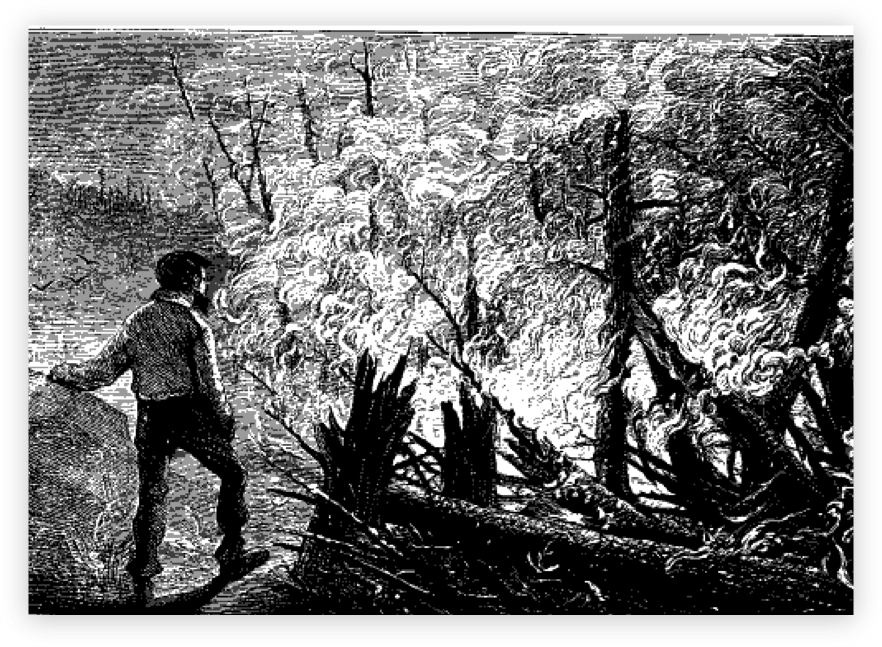
Photo Credit Project Gutenberg
Truman’s old friend told him as much, and he beseeched Truman to put his trust in heaven— “Help yourself and God will help you.”
So Truman kept trying. He headed back to the Yellowstone River, hoping to follow it north towards a settlement. He repeated to himself “I will not perish in this wilderness.” He dreamt of sumptuous, five-course meals at New York restaurants, and he looked to his new traveling companion for reassurance when his spirits sagged. He endured a night without fire when the sun refused to shine, and he began to crawl when his legs refused to carry him. Then his counsellor disappeared, so Truman began having conversations with his arms, legs, and stomach. “The legs implored me for rest, and the arms complained that I gave them too much to do,” Truman later wrote, and he would argue with them all day long. “They appeared to be perfectly helpless of themselves; would do nothing for me or for each other.”
Truman spent one night in a bear’s den and set another forest fire, though this one was smaller than the first. Then a winter storm broke—by this time it was already into September—and Truman spent two nights crawling around to gather firewood in the snow. “I cannot perish in this wilderness.”
On his 37th day in Yellowstone, our man Truman was only three days travel from Boteler’s Ranch, which lay between present-day Emigrant and Gardiner. But he knew he wouldn’t make it. “I stumbled blindly on, stopping within the shadow of every rock and clump to renew energy for a final conflict for life,” Truman wrote. “I felt that I had done all that man could do.”
So Truman kept trying. He headed back to the Yellowstone River, hoping to follow it north towards a settlement. He repeated to himself “I will not perish in this wilderness.” He dreamt of sumptuous, five-course meals at New York restaurants, and he looked to his new traveling companion for reassurance when his spirits sagged. He endured a night without fire when the sun refused to shine, and he began to crawl when his legs refused to carry him. Then his counsellor disappeared, so Truman began having conversations with his arms, legs, and stomach. “The legs implored me for rest, and the arms complained that I gave them too much to do,” Truman later wrote, and he would argue with them all day long. “They appeared to be perfectly helpless of themselves; would do nothing for me or for each other.”
Truman spent one night in a bear’s den and set another forest fire, though this one was smaller than the first. Then a winter storm broke—by this time it was already into September—and Truman spent two nights crawling around to gather firewood in the snow. “I cannot perish in this wilderness.”
On his 37th day in Yellowstone, our man Truman was only three days travel from Boteler’s Ranch, which lay between present-day Emigrant and Gardiner. But he knew he wouldn’t make it. “I stumbled blindly on, stopping within the shadow of every rock and clump to renew energy for a final conflict for life,” Truman wrote. “I felt that I had done all that man could do.”
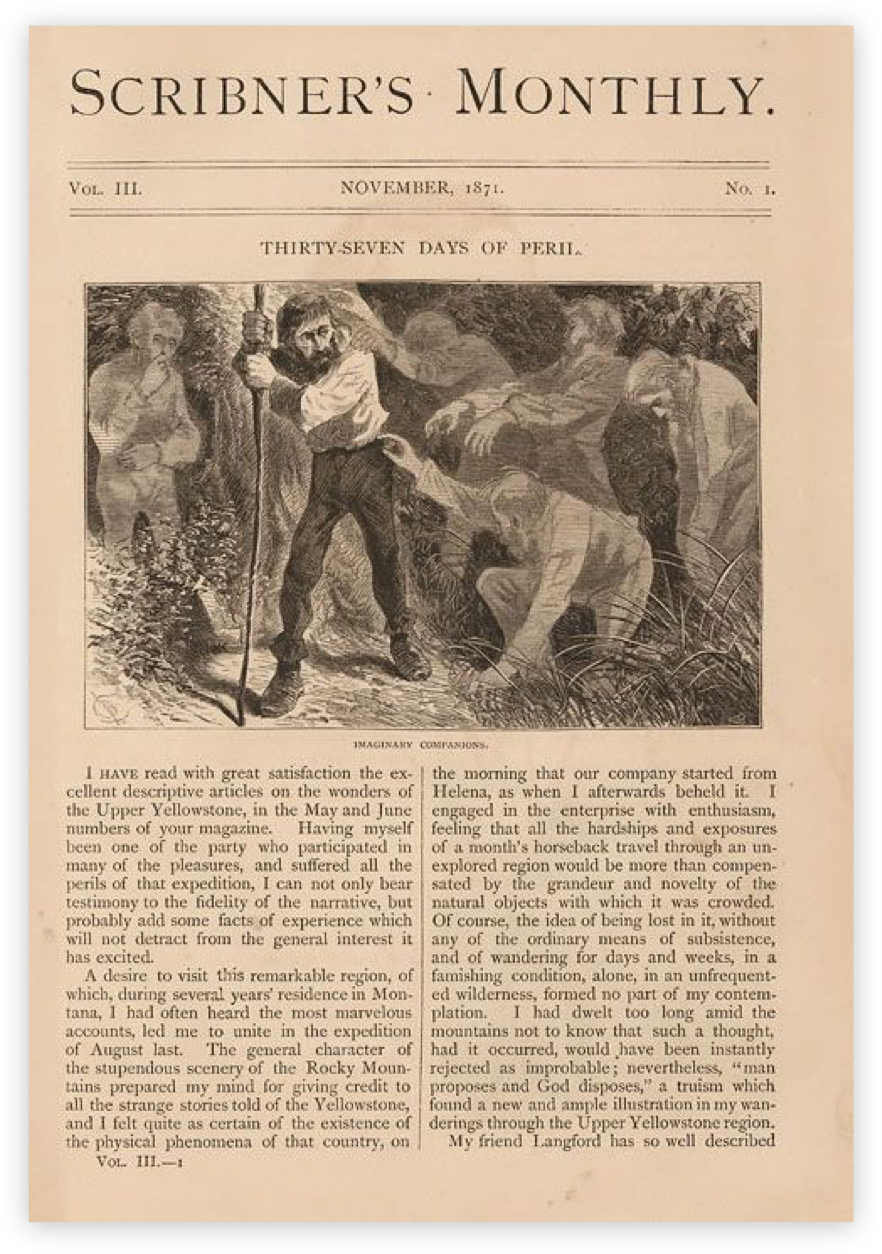
Truman C Everts’ account of his time in Yellowstone published in Scribner’s Monthly in November of 1871.
All he could do, it turned out, would just be enough. Truman’s deliverance came in the form of two men on horseback, John Baronett and George A. Prichette, who had heard of a $600 reward for his recovery. At first, they thought the shape crawling along the ground was a wounded bear, but it was too emaciated for that. When he was discovered, our man Truman weighed a mere 50 pounds, his clothing was in shreds, and his shoeless feet were frost bitten and literally worn down to the bone.
“Are you Mr. Everts?” they asked.
“Yes. All that is left of him,” Truman replied.
After nursing Truman back to life for two days, Baronett and Prichette took him twenty miles to the cabin of a miner to tend to his infirmaries. The thistle roots had ground Truman’s stomach to an almost complete halt, and he thought that he had been saved “only to die among friends.” But, as Providence would have it, an old trapper passed by the cabin, and he had Truman drink a pint of hot bear grease to clear out his system.
In the end, Truman C. Everts did not perish in that wilderness. Instead, our man lived another 31 years and moved back to the east coast where he married a 14-year-old at the age of 64. His story of survival made it back to the east coast too, where it helped Yellowstone eventually become the country’s first national park. Everts refused to pay the reward for his own recovery to his saviors Baronett and Pritchett, saying that he could have made it out of the wilderness on his own. He also petitioned that a peak he had climbed in the early days of the expedition be named after him, but his request was denied (that peak is now called Mount Sheridan), although the thistle that kept him alive is now called “Evert’s Thistle.” The U.S. government offered Truman the role of the first superintendent of Yellowstone, but he politely declined—it wasn’t a paid position.
“Are you Mr. Everts?” they asked.
“Yes. All that is left of him,” Truman replied.
After nursing Truman back to life for two days, Baronett and Prichette took him twenty miles to the cabin of a miner to tend to his infirmaries. The thistle roots had ground Truman’s stomach to an almost complete halt, and he thought that he had been saved “only to die among friends.” But, as Providence would have it, an old trapper passed by the cabin, and he had Truman drink a pint of hot bear grease to clear out his system.
In the end, Truman C. Everts did not perish in that wilderness. Instead, our man lived another 31 years and moved back to the east coast where he married a 14-year-old at the age of 64. His story of survival made it back to the east coast too, where it helped Yellowstone eventually become the country’s first national park. Everts refused to pay the reward for his own recovery to his saviors Baronett and Pritchett, saying that he could have made it out of the wilderness on his own. He also petitioned that a peak he had climbed in the early days of the expedition be named after him, but his request was denied (that peak is now called Mount Sheridan), although the thistle that kept him alive is now called “Evert’s Thistle.” The U.S. government offered Truman the role of the first superintendent of Yellowstone, but he politely declined—it wasn’t a paid position.
He died at home of pneumonia at the age of 85 while being cared for by a wife who was 50 years his junior—which I can only imagine was the dream for almost every man in the 1890s—and his tale of glorious misadventure is now legend.
Read Truman’s original “Thirty-Seven Days of Peril” in Scribner’s Monthly from 1871.
Read Truman’s original “Thirty-Seven Days of Peril” in Scribner’s Monthly from 1871.