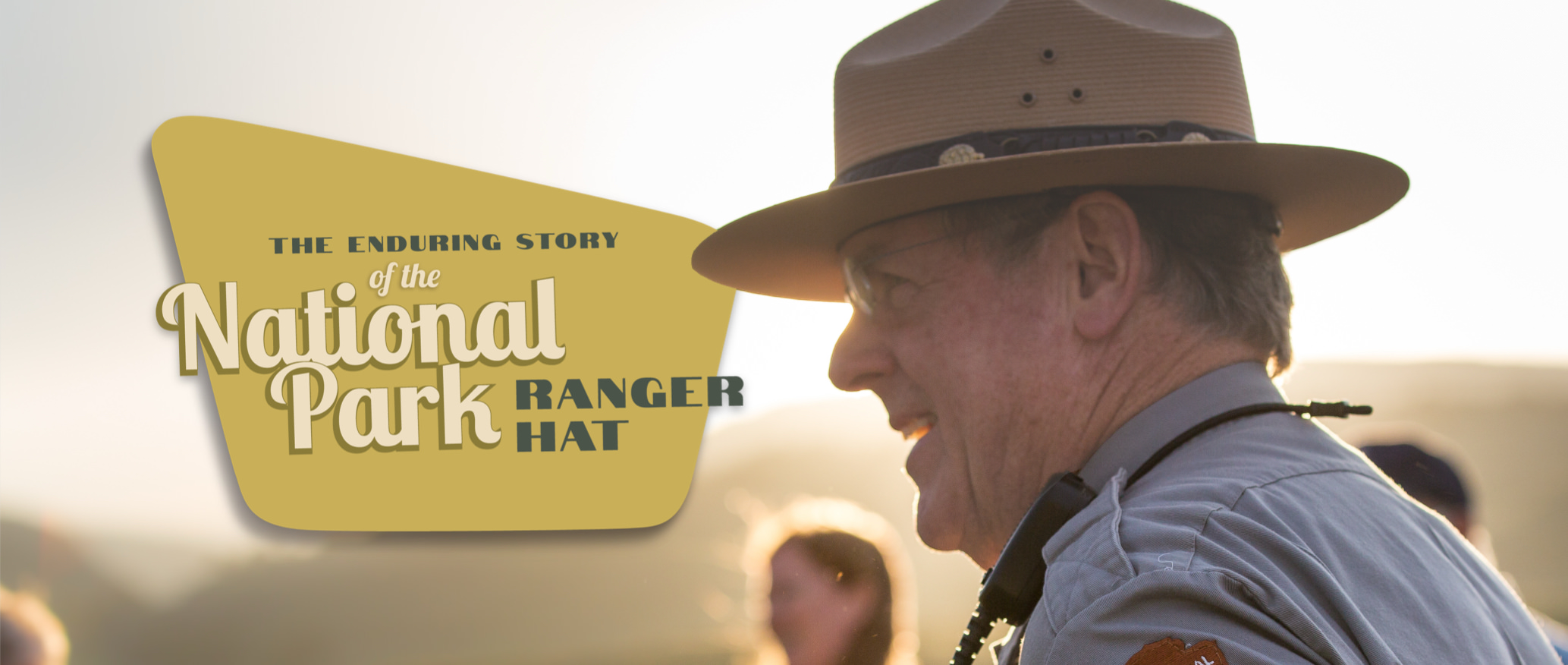
Ranger at sunset, Lamar Valley. Photo by NPS /Neal Herbert

By Sarah May
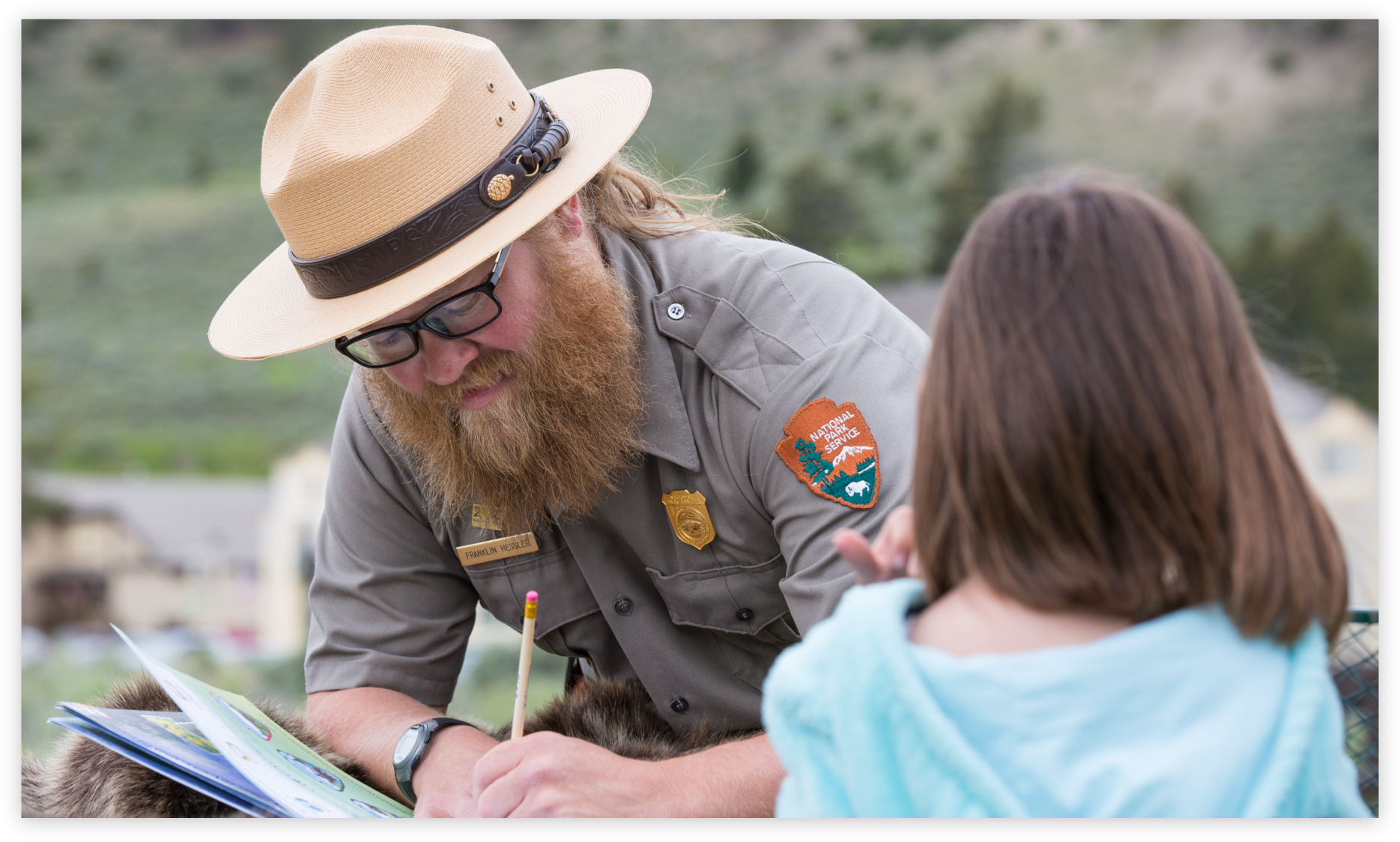
Walk into almost any national park visitor center and you will spot a broad-brimmed, high-crowned hat perched squarely on the head of a ranger in gray and green. The silhouette is unmistakable. Four neat pinches rise from the crown like the points of a compass, the stiff brim casts a clean shadow, and a leather band embossed with sequoia cones circles the base. This is the National Park Service “flat hat.”
Designed in the early days of the National Park Service and refined through the 1930s, the iconic National Park ranger hat made its debut atop the heads of the first park rangers and has remained a timeless utilitarian fashion piece ever since. Still worn today by present-day park rangers and one famous fire-preventing bear, the hat is far more than headgear. For park rangers, the distinctive flat hat is a cherished point of pride, a tangible link to park-ranger heritage and the daily mission of park stewardship. Easily spotted among the crowds, the familiar silhouette acts as a symbolic promise of helpful guidance and expert knowledge of the parks.
Designed in the early days of the National Park Service and refined through the 1930s, the iconic National Park ranger hat made its debut atop the heads of the first park rangers and has remained a timeless utilitarian fashion piece ever since. Still worn today by present-day park rangers and one famous fire-preventing bear, the hat is far more than headgear. For park rangers, the distinctive flat hat is a cherished point of pride, a tangible link to park-ranger heritage and the daily mission of park stewardship. Easily spotted among the crowds, the familiar silhouette acts as a symbolic promise of helpful guidance and expert knowledge of the parks.
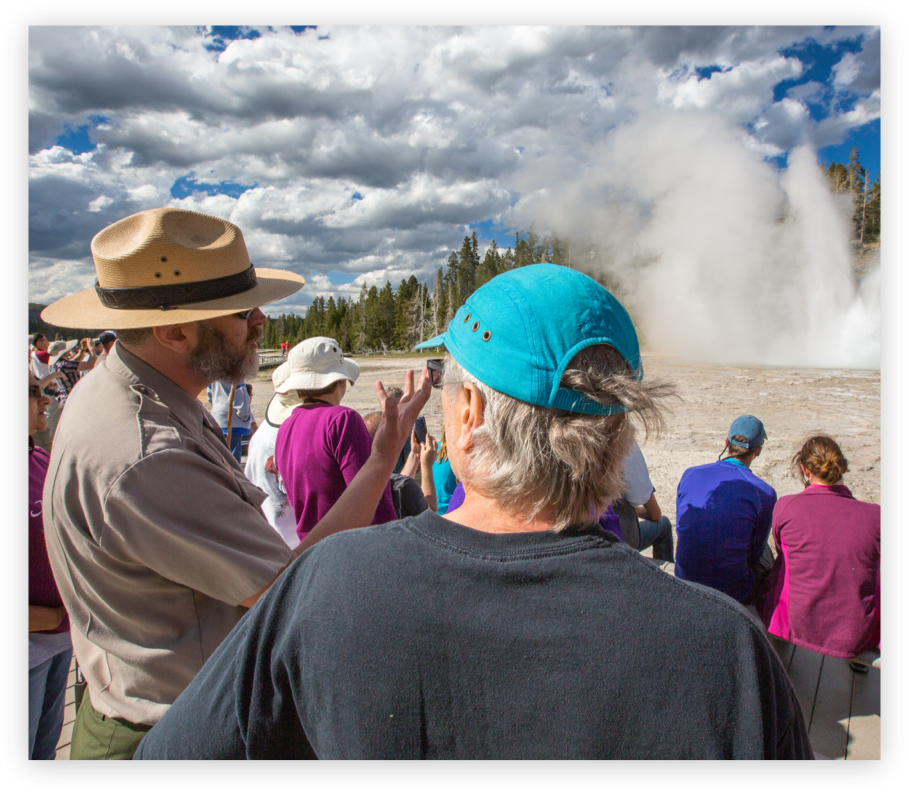
Ranger Terrance explains the mechanics of geysers, while a “grand” example erupts in the background. Photo By NPS / Neal Herbert
The hat’s story begins not in a design studio but on the rain-soaked battlefields of the Spanish-American War. In 1898, American soldiers fighting in Cuba and the Philippines discovered a frustrating flaw in their standard campaign hats. A single crease running front to back created a natural well that collected water, only to dump it down the wearer’s neck with every step. Annoyed with the lack of protection from the elements, the soldiers began to mold their hats by pinching them into four quadrants, allowing for better water flow and less pooling during the rain.
At the inception of the national parks, before a formal civilian ranger service existed, parks such as Yosemite and Sequoia were patrolled by veteran Buffalo soldiers who had served during the Spanish-American War. These troopers brought their hat knowledge to the job and introduced the efficient four-quadrant hat to the parks. In 1911, the U.S. Army officially adopted this effective “Montana Peak” design, spreading the hat shape to other parks, such as Yellowstone. By the time the National Park Service was created in 1916, the hat was already part of the informal uniform. It wouldn’t be until 1920 when the National Park Service’s first formal uniform regulations specified a “Stetson” hat of either stiff or cardboard brim in “belly” color—a soft reddish-buff shade named after the underfur of the Belgian hare.
At the inception of the national parks, before a formal civilian ranger service existed, parks such as Yosemite and Sequoia were patrolled by veteran Buffalo soldiers who had served during the Spanish-American War. These troopers brought their hat knowledge to the job and introduced the efficient four-quadrant hat to the parks. In 1911, the U.S. Army officially adopted this effective “Montana Peak” design, spreading the hat shape to other parks, such as Yellowstone. By the time the National Park Service was created in 1916, the hat was already part of the informal uniform. It wouldn’t be until 1920 when the National Park Service’s first formal uniform regulations specified a “Stetson” hat of either stiff or cardboard brim in “belly” color—a soft reddish-buff shade named after the underfur of the Belgian hare.
While the hat is effective in protecting rangers from the elements, the original design was underwhelming and bland. In 1930, landscape architect Thomas Vint prepared a simple leather band etched with sequoia foliage and cones and was secured on the left side with ring fasteners. Selecting the giant sequoia cone as the embellishment was a thoughtful choice; the enduring trees of Sequoia and Yosemite National Parks symbolized the Service’s mission of long-term preservation. With the design approved, the leather hatband, complete with sterling-silver sequoia-cone ornaments, became part of the standard uniform.
Today, upon receiving their uniforms, new rangers learn to tie their own leather hatbands—a small tradition that many describe as a quiet moment of connection to the uniform and to those who wore it before them. Over the decades the silver cones were replaced by brass versions, yet the basic design remains essentially unchanged. Occasionally, a ranger still appears with a vintage silver cone, a tangible heirloom passed from one generation of stewards to the next.
Today, upon receiving their uniforms, new rangers learn to tie their own leather hatbands—a small tradition that many describe as a quiet moment of connection to the uniform and to those who wore it before them. Over the decades the silver cones were replaced by brass versions, yet the basic design remains essentially unchanged. Occasionally, a ranger still appears with a vintage silver cone, a tangible heirloom passed from one generation of stewards to the next.
As the national park system grew and visitors developed a deep love for the parks, the ranger hat became a beloved symbol. The same hat silhouette has made its way into popular culture in unexpected ways. Most notably, Smokey Bear, the Forest Service’s beloved fire-prevention mascot created in 1944, wears a nearly identical campaign hat. The association is so strong that many people casually call the ranger’s hat a “Smokey Bear hat,” even though the two agencies remain separate. The shared visual language only reinforces the hat’s status as a broader emblem of outdoor stewardship and public service.
In an era of rapid change, the endurance of the flat hat is quite remarkable. The four pinches that once kept rain from pooling now give the hat its instantly recognizable profile. The sequoia motifs that landscape architect Thomas Vint chose still speak of permanence and care. And the simple act of placing the hat on one’s head at just the right angle still carries the weight of a tradition that stretches from Buffalo soldiers in the high Sierra to the rangers who now greet visitors on a busy summer day. Should you come across a ranger wearing a flat hat, take a moment to chat about his or her uniform.
In an era of rapid change, the endurance of the flat hat is quite remarkable. The four pinches that once kept rain from pooling now give the hat its instantly recognizable profile. The sequoia motifs that landscape architect Thomas Vint chose still speak of permanence and care. And the simple act of placing the hat on one’s head at just the right angle still carries the weight of a tradition that stretches from Buffalo soldiers in the high Sierra to the rangers who now greet visitors on a busy summer day. Should you come across a ranger wearing a flat hat, take a moment to chat about his or her uniform.
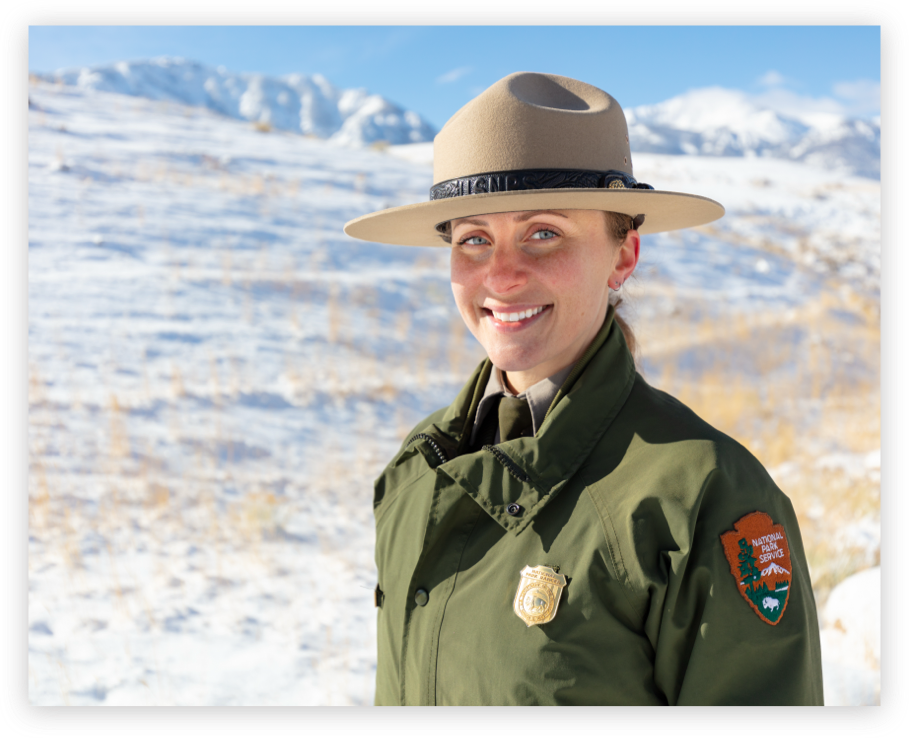
Park Ranger Lydia Faller. Photo By NPS / Jacob W. Frank
Visitors to Yellowstone can learn more about the history of the park ranger hat at the Museum of the National Park Ranger while an extensive collection of artifacts can be found both in person or online through NPS History Collection at Harpers Ferry Center in West Virginia.