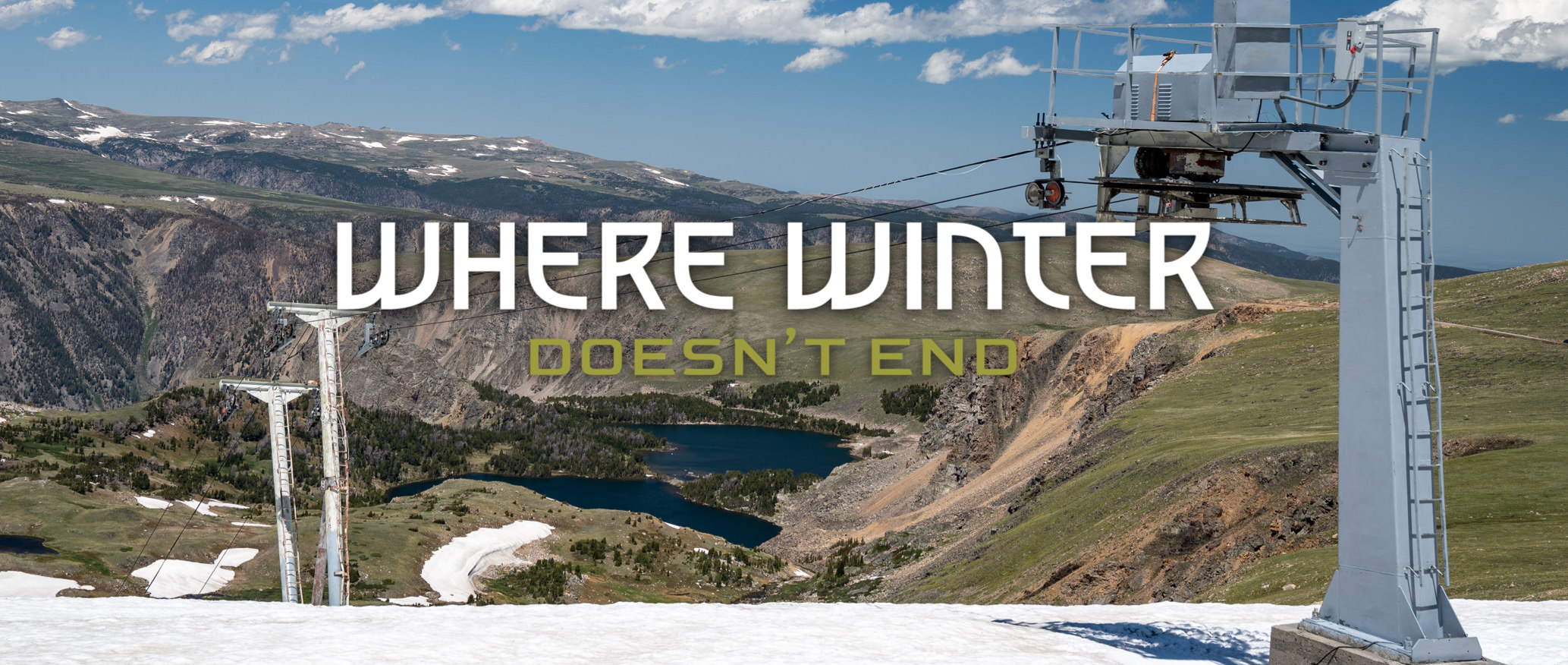
The view from one of the main ski runs at Beartooth Basin. Photo by Simon Lynes

By Simon Lynes
At nearly 11,000 feet on the Beartooth Plateau, an aging pair of lifts, a diesel generator and a small crew of diehard skiers keep one of North America’s strangest ski areas running into summer.
A little over a year ago I headed up to the Beartooth Mountains with a group of friends from Bozeman. We all stopped in Red Lodge for pizza and some shop hopping along its classic Western main street before heading into the hinterlands. We got to camp relatively early, which is always the move with established Forest Service campgrounds, especially around greater Yellowstone. We set up and settled in by the fire, tucked beneath towering lodgepole pines and away from the open plains we had crossed. The next morning, we woke up and had coffee and a quick breakfast before ascending a vertical mile of switchbacks clawing their way up towards the Wyoming border and our destination, the strange and wonderful little ski area of Beartooth Basin.
A unique roadside stop on the sprawling high elevation wilderness of the Beartooth Plateau in the northeast corner of Yellowstone National Park is Beartooth Basin, North America’s only ski area exclusively open during the summer months. It was originally established in the mid-1960’s by Austrians Pepi Gramshammer, Eric Sailer, and Anderl Molterer as an alpine ski racing summer training ground. Beartooth Basin (formerly: The Red Lodge International Ski and Snowboard Camp) is one of North America’s oldest alpine ski training areas. As the previous owners aged, they found themselves bowing out to a younger generation of skiing enthusiasts who looked to open the area to the public and not just the private groups and teams, as had been tradition in the past.
A unique roadside stop on the sprawling high elevation wilderness of the Beartooth Plateau in the northeast corner of Yellowstone National Park is Beartooth Basin, North America’s only ski area exclusively open during the summer months. It was originally established in the mid-1960’s by Austrians Pepi Gramshammer, Eric Sailer, and Anderl Molterer as an alpine ski racing summer training ground. Beartooth Basin (formerly: The Red Lodge International Ski and Snowboard Camp) is one of North America’s oldest alpine ski training areas. As the previous owners aged, they found themselves bowing out to a younger generation of skiing enthusiasts who looked to open the area to the public and not just the private groups and teams, as had been tradition in the past.
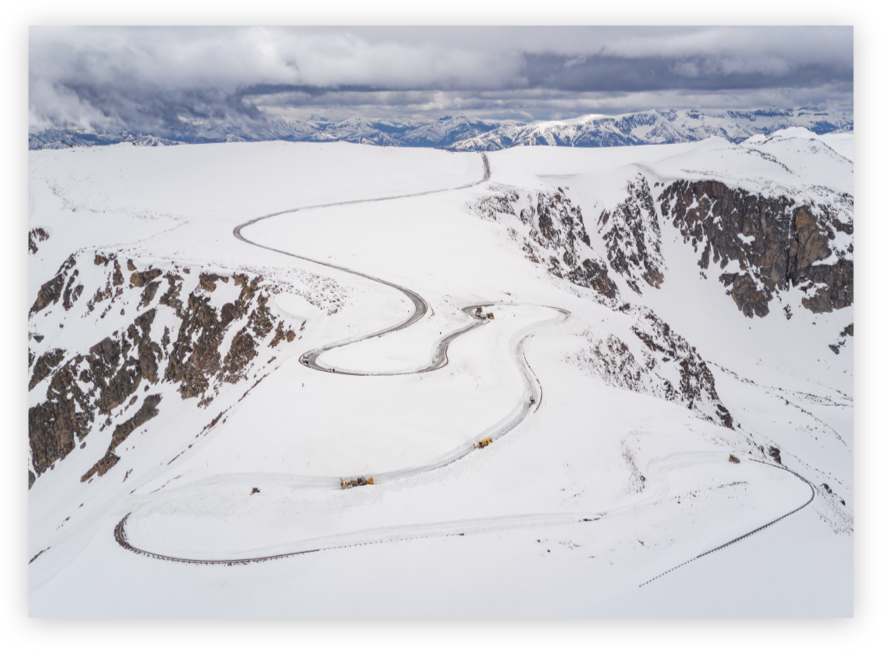
Beartooth Highway Plowing Operations 2025: Bulldozers and rotary blowers. Photo by NPS / Jacob W. Frank
The area boasts 900 vertical feet of skiing and riding when both of its platter or “poma” lifts are running. These access the six hundred acres of patrolled advanced and extreme terrain. A day ticket will run you $50 and a season pass costs $395.
If you look at the Beartooth Basin’s website, you’ll find the adage: “There is no lodge or warming hut facilities. You could call it backcountry skiing with a lift.”
I sat down with my old friend Mike Miller who is an operations manager and ski patroller up at Beartooth Basin, as well as a patroller at nearby Red Lodge Mountain during the more standard winter ski season of December to April. Growing up in northern New England and studying ski area management at the University of Maine Farmington, skiing has always been a huge part of Mike’s life.
He is part of a small crew that is drawn from near and far to where Wyoming meets Montana. This ski area sits among a windswept cirque of snow split with rocks dotted with a ticket trailer and ski patrol trailer that serve as the base area. These two trailers sit at the top of the long alpine slope, flattening out at the bottom where two alpine lakes and subalpine fir gather, before the view plunges into a deep gorge five thousand feet below. The rattle and smell of the massive diesel engine that keeps it all running feels almost at odds with a landscape as proud and majestic as the Alps. The employees like to say that it is the spirit of skiing, and it is easy to see why.
“It's not something that has a ton of information on it,” Miller said. “And so sometimes people just show up and are like, ‘what the hell is this place?’ ‘Where's the bunny hill?’ ‘How do you get down?’ We say, ‘Oh, you have to jump off the cornice, and you ride these ancient lifts.’”
“It's not something that has a ton of information on it,” Miller said. “And so sometimes people just show up and are like, ‘what the hell is this place?’ ‘Where's the bunny hill?’ ‘How do you get down?’ We say, ‘Oh, you have to jump off the cornice, and you ride these ancient lifts.’”
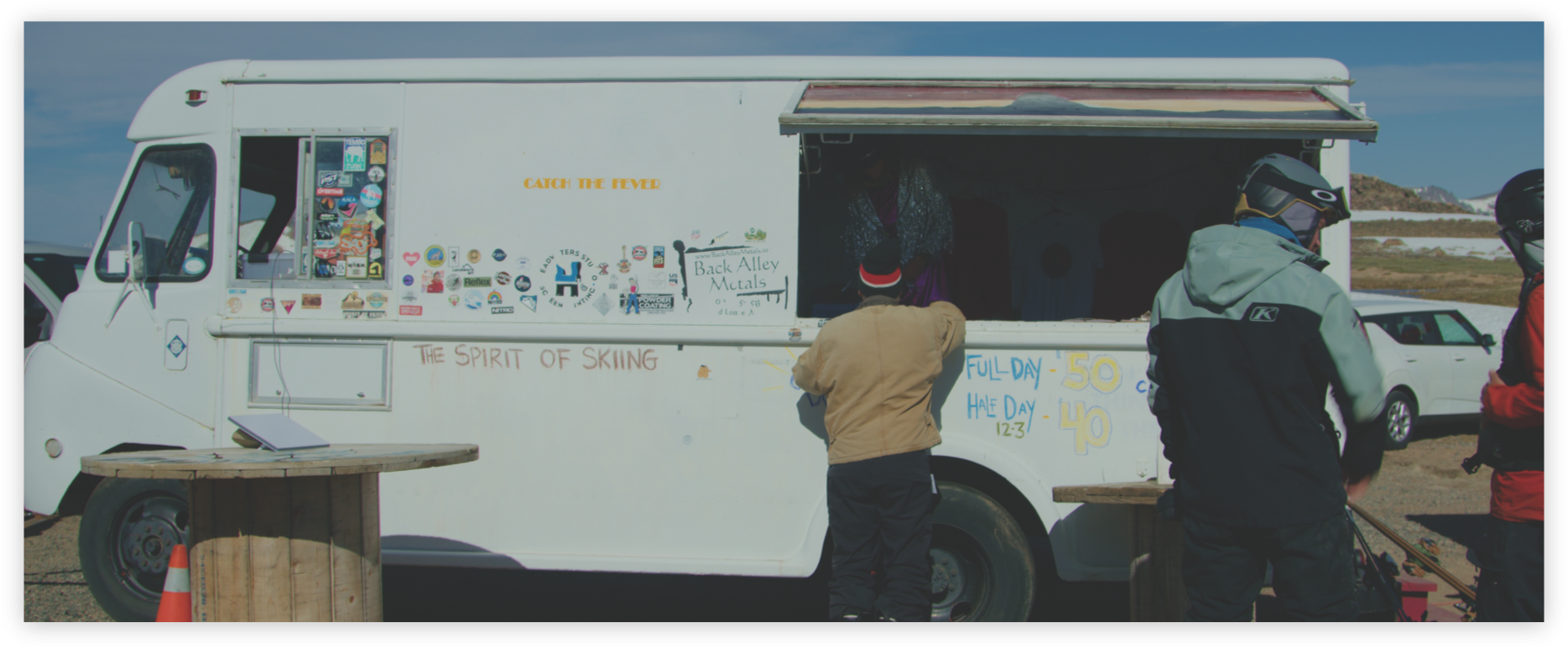
Skiers waiting in line to buy their lift tickets at Beartooth Basin. Photo by Simon Lynes.
Miller explained to me that when he got hired as a patroller that the job description is much broader than a usual ski area. Everyone is hired as “a basin employee” and you are just as likely to see a patroller selling tickets as you are to see them fixing a lift or driving a snowcat. The ragtag crew that makes the wheels turn is small, tough, and well rounded, drawing from an enormous variety of skills. He emphasized, “don’t be expecting it to be like another ski area, some people do come here and expect it to be and then they quickly, quickly realize it's not.”
Originally, the Austrians that founded the ski area set up temporary rope tows every spring for a race camp. In the eighties, they reached out to friends and were able to acquire two pommel lifts. “Eventually they're going to be phased out, but we'll keep them going for as long as we can,” Mike said.
There is no power grid on this primeval alpine tundra. “Everything runs off of a big industrial diesel generator up there,” Miller said. “That being said, diesels don't like operating at 11,000 feet.”
As the last of the typical ski areas are shutting down and folks begin planning river trips, the Beartooth Basin crew heads up the seasonally closed Beartooth Highway. “Early season we'll do a handful of blasting days cause that cornice sits untouched all winter,” Miller said. “That’s one thing that’s unique about this place. A lot of ski resorts will periodically maintain their cornice, which keeps it friendly. We go in and the thing is like 15 feet tall, and we have to figure out how to strategically blast it without hitting the lower lift towers with the snow chunks.”
A cornice is a wall of snow that gets packed into a ridgeline by the wind throughout the winter.
There is no lodging at the ski area. There are several maintained campgrounds in the woodlands near the bottom of the Beartooth Highway with facilities. Once you get up onto the Beartooth Plateau, there is a massive network of dispersed camping sites, but, be aware, you are very far from gas or any other utilities, so come prepared. Even for Red Lodge locals and employees, the commute takes at least 45 minutes one way. The dirt parking area at the ski area is small so skier visits are limited to around 100-150 people, depending on how many cars are there and how well people park.
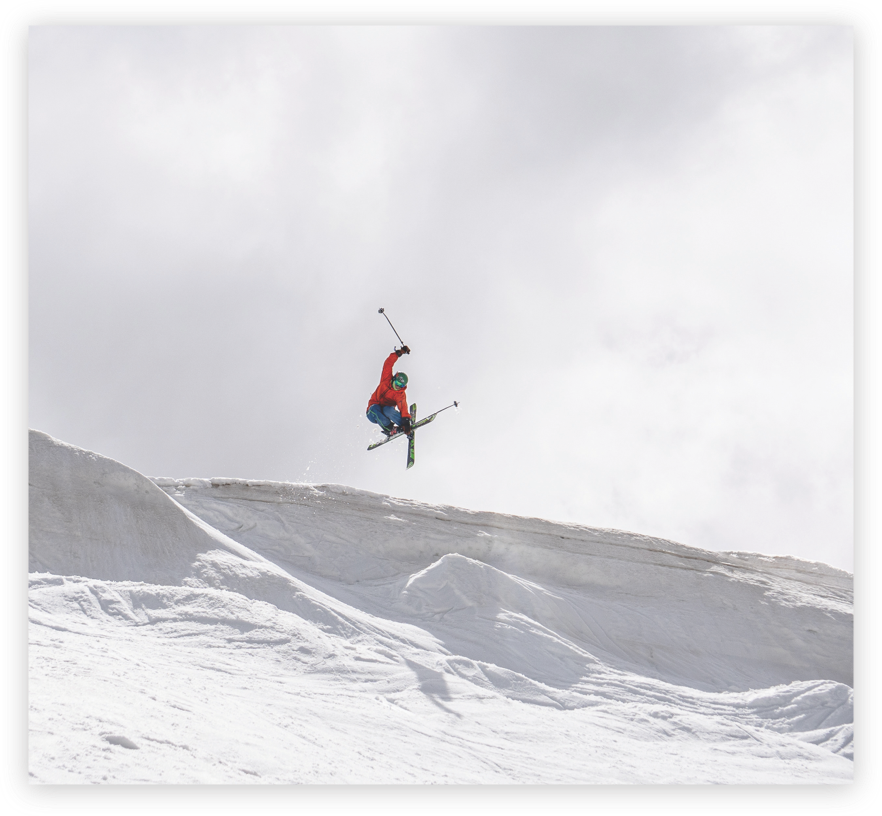
Skier Simon Karroum jumps off the cornice at Beartooth Basin. Photo by Luke Gentry.
Even if you're a good skier, ski within your limits. Do your research and know that it's a bare bones place. “I like telling people that we have double black terrain with triple black lift lines,” Miller said laughing. “Like riding downhill on a snowboard is one thing but trying to get back up a 35-to-40-degree slope on a snowboard with a handle in between your legs, it's totally different.”
Mike told me about a handful of people from the East coast that came from sea level and wanted to come ski hard all day, didn’t drink any water, had a handful of beers, and got what he described as “wicked” altitude sickness. The parking lot is a popular après spot but stands at nearly 11,000 feet, higher than even Arapahoe Basin’s infamous “The Beach” tailgating area in Colorado which is the highest base area of any major ski resort.
“Be prepared and be humble, and don't be afraid to admit, yeah, ‘this place might be a little bit too much for me,’” he said. “We're not big, but we're steep and gnarly and kind of hard to get out of.”
With that in mind, obstacles are another important aspect to consider when visiting this ski area. “If I covered every rock that was at Beartooth Basin, this place would look like a porcupine,” Miller said. “There are signs that say unmarked obstacles do exist, ski with caution. And that's about all we can do.”
I asked him about what draws him and the others back to the Basin year after year as opposed to following the herds of other seasonal workers, skiers and riders, who head for the rivers and bike trails when the weather warms.
“We just do it because we all really love skiing and it's the most unique experience you could possibly have,” Miller said. “It doesn't matter if you're up there for 14 hours a day, you just do it because you put smiles on people's faces and it's some of the coolest, most unique skiing you can get.”