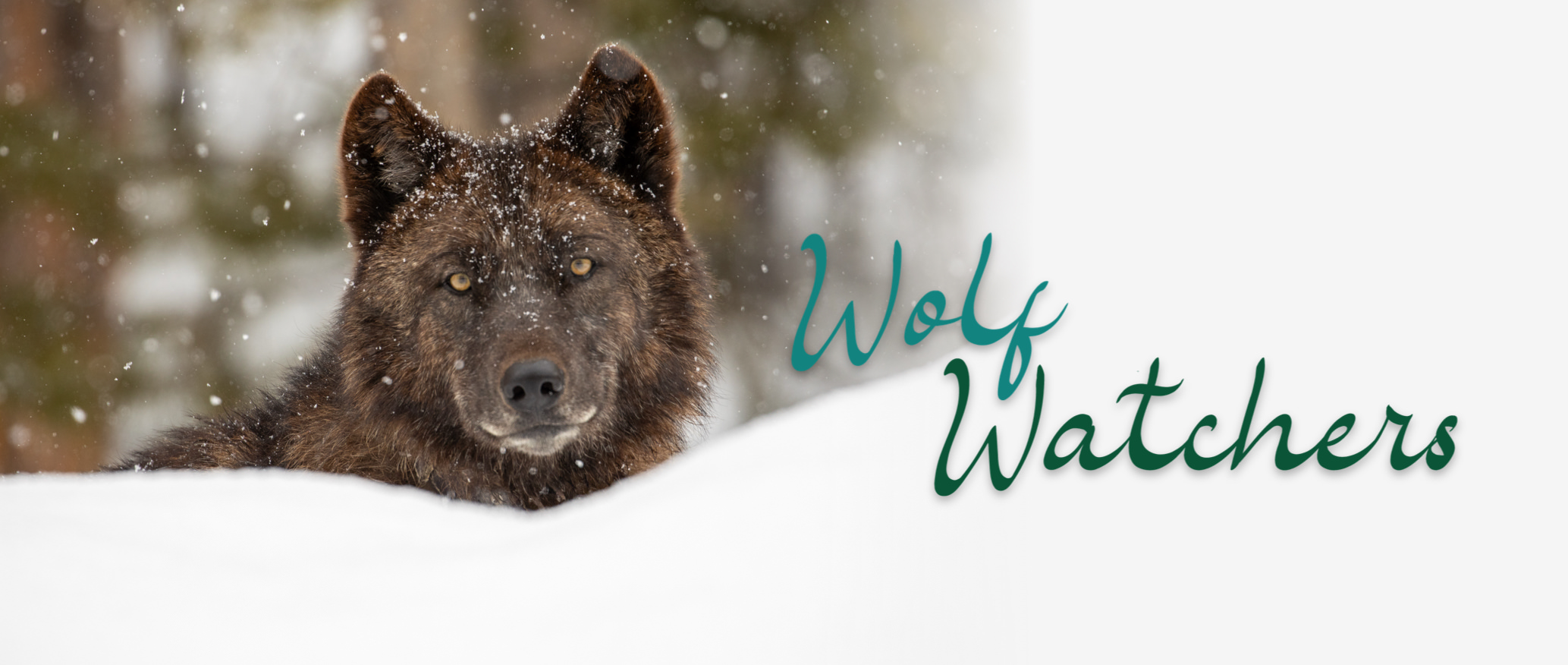
Wolf in Firehole area. Wapiti pack. Photo by NPS/Jim Peaco

By Fischer Genau
Morning was still a long way off as I left my campsite in the hills above Gardiner and drove the dirt road down towards Yellowstone’s northeast entrance. I passed through the gates at 5:15 a.m., surprised to see a park ranger already there to usher me in. The twin beams of another car’s headlights appeared behind me as I pulled into the park, and I wondered if they were up early for the same reason that I was—that’s when the wolves like to move.
I was en route to an early morning rendezvous, but I wouldn’t have service in the park, and I was anxious I might miss it. Longtime wolf watchers in Yellowstone have their own intelligence network where they exchange tips, sightings, and other information over radio waves, but as a novice, I wasn’t tapped in. Instead, I was armed with two pieces of information: the make and model of a vehicle, and the last three digits of its license plate. That vehicle belonged to Rick McIntyre, the original wolf watcher in Yellowstone National Park. McIntyre arrived in Yellowstone in 1994, the same year wolves did, and he still serves as a kind of figurehead for the wolf watching community. McIntyre has been observing Yellowstone wolves for 31 years, and he once spent 15 years straight visiting the park, only breaking it to get a quintuple bypass heart surgery in Billings. He’s also written 10 books on the subject, and anyone who knows a thing about Yellowstone wolves knows his name. If anyone could find wolves that morning, it was McIntyre. But I had to find him first. Rounding the bend into Lamar Valley an hour later, I clocked a black SUV that matched the description I’d been given, and as it passed me, I whipped around in a pullout to trail him, straining for a look at the license plate. It was a match.
I was en route to an early morning rendezvous, but I wouldn’t have service in the park, and I was anxious I might miss it. Longtime wolf watchers in Yellowstone have their own intelligence network where they exchange tips, sightings, and other information over radio waves, but as a novice, I wasn’t tapped in. Instead, I was armed with two pieces of information: the make and model of a vehicle, and the last three digits of its license plate. That vehicle belonged to Rick McIntyre, the original wolf watcher in Yellowstone National Park. McIntyre arrived in Yellowstone in 1994, the same year wolves did, and he still serves as a kind of figurehead for the wolf watching community. McIntyre has been observing Yellowstone wolves for 31 years, and he once spent 15 years straight visiting the park, only breaking it to get a quintuple bypass heart surgery in Billings. He’s also written 10 books on the subject, and anyone who knows a thing about Yellowstone wolves knows his name. If anyone could find wolves that morning, it was McIntyre. But I had to find him first. Rounding the bend into Lamar Valley an hour later, I clocked a black SUV that matched the description I’d been given, and as it passed me, I whipped around in a pullout to trail him, straining for a look at the license plate. It was a match.
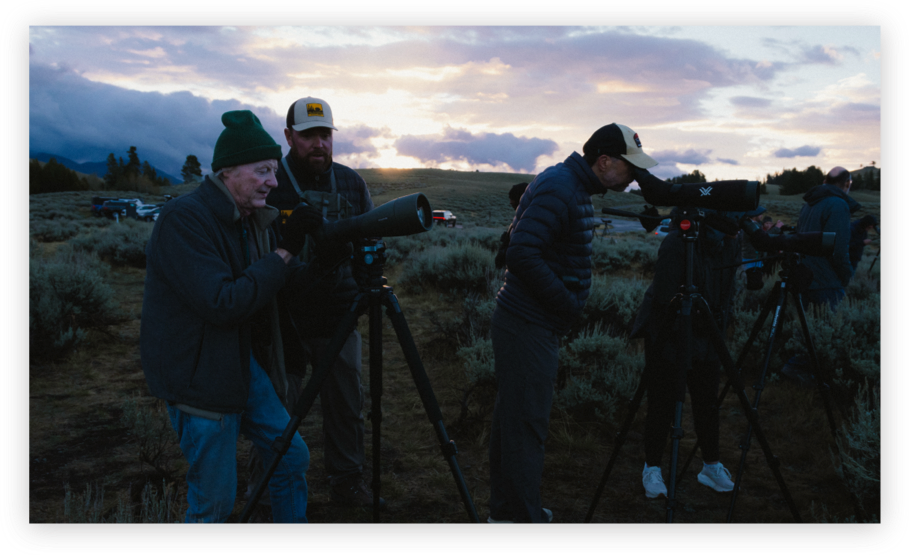
Photo by Fischer Genau
McIntyre and I weren’t the only ones who got up early. On my drive, I saw at least 30 cars snaking their way into the interior, and I imagine most of them were for the same reason that I was. Wolf watching is a demanding hobby, yet every year, tens of thousands of people travel to Yellowstone for the chance to see a wolf, and during the spring, crowds of hundreds line up each morning along the road to Slough Creek Campground to watch the new batch of pups from the Junction Butte pack emerge from their dens. Wolf watching has become so popular that it supports a number of wildlife tourism and guide businesses, and according to an ongoing Montana State University research project, wolf tourism alone brings in about $83 million to the region each year, making it one of Gardiner’s biggest industries.
After a few miles cruising east at observation speed, McIntyre stopped at a pullout and I cut in behind. The sky was still dark, bruised by navy storm clouds leftover from the night before, and the landscape lay in shadow, so any canine shapes moving in the distance would have been hard to make out. I walked around McIntyre’s driver side to introduce myself, and found him speaking into a microphone connected to a small black receiver in his passenger seat. He and wildlife filmmaker Bob Landis were the first to establish radio contact in the park, and he still goes by Unit One. McIntyre told me it was still too dark to see much, so I walked back to my car to wait. Then a tip came in over the wire, and he and I were on the move again.
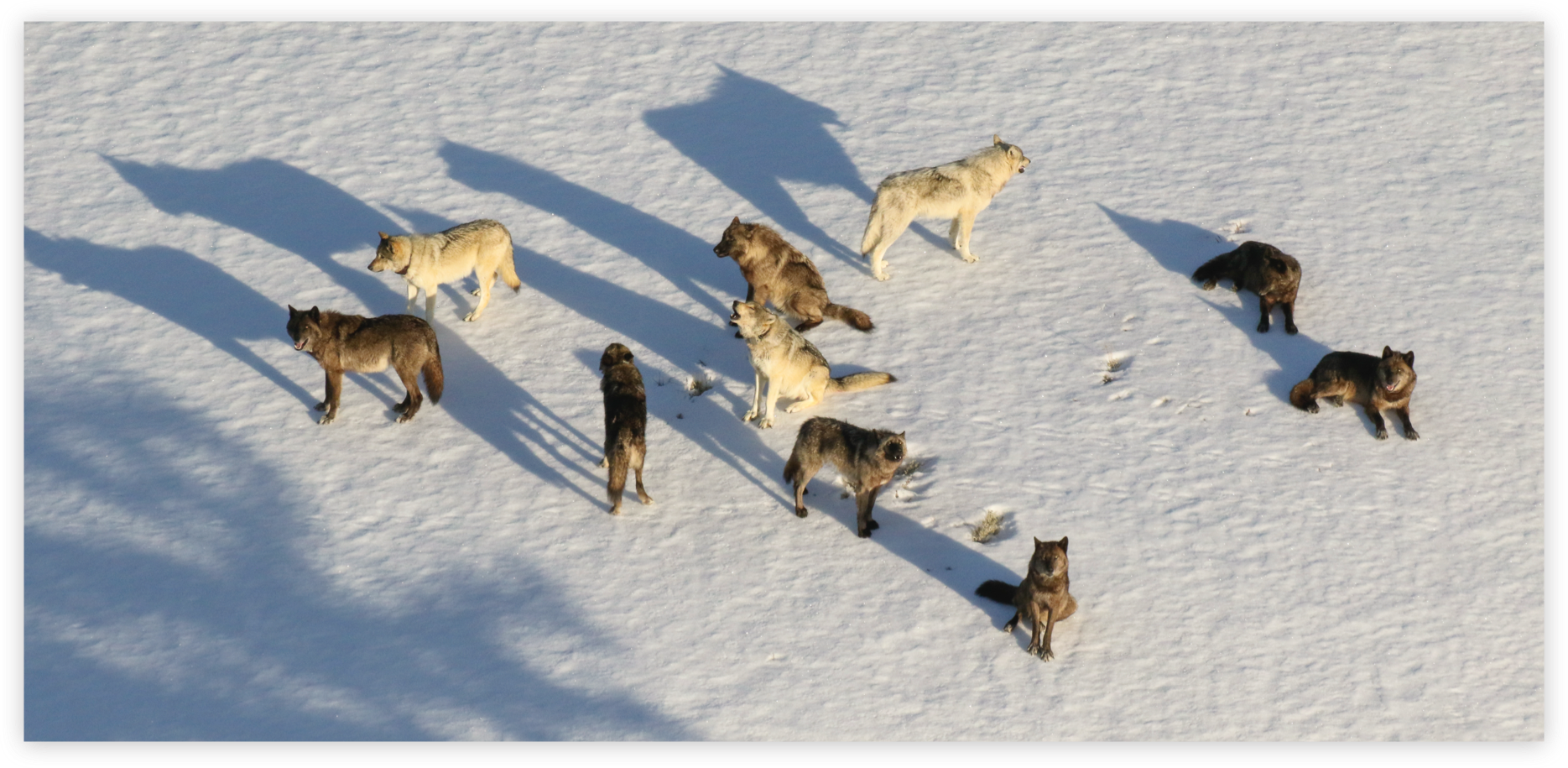
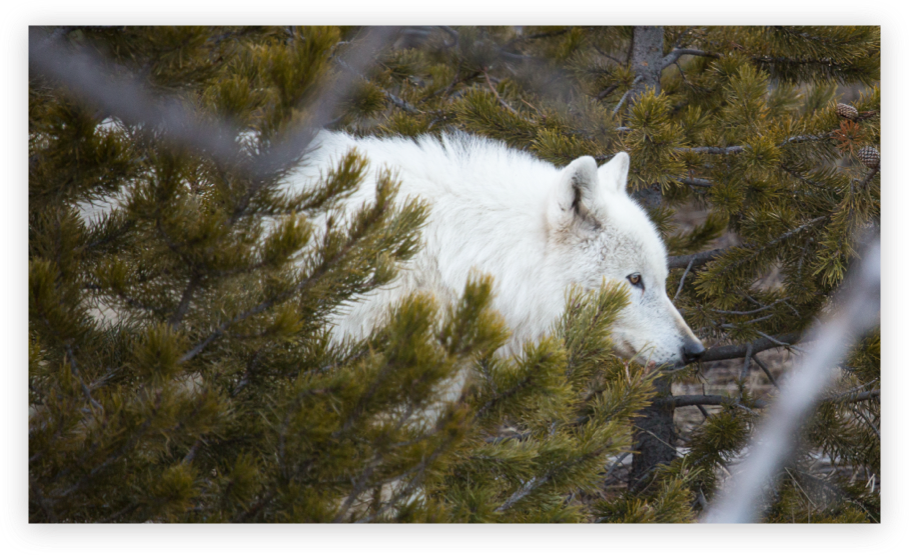
About 80 wolves live in Yellowstone, spread across eight different packs. Right now, the largest is the Wapiti Lake pack at around 18, but the most well-known is the Junction Butte pack. The Junction Butte wolves live in Lamar Valley, and the open landscape and proximity to a major roadway means they’re often observable by visitors. It’s this visibility that makes Yellowstone wolves unique. Close to 60 wolves live in Glacier National Park too, but, due to terrain, people are lucky to catch a glimpse of one on the side of the road. In Yellowstone, visitors, researchers, and documentary film crews can track the wolves’ movements and behaviors for hours at a time. This has made Yellowstone wolves, especially those living in Lamar, unofficial ambassadors for the species with the sheer volume of sightings, nature films, and stories emanating out from the park. East of the Junction Butte pack live the Rescue Creek pack, another oft-observed group that occupy the land between Mammoth Hot Springs and Lamar Valley, and that’s where McIntyre and I were headed.
About 80 wolves live in Yellowstone, spread across eight different packs. Right now, the largest is the Wapiti Lake pack at around 18, but the most well-known is the Junction Butte pack. The Junction Butte wolves live in Lamar Valley, and the open landscape and proximity to a major roadway means they’re often observable by visitors. It’s this visibility that makes Yellowstone wolves unique. Close to 60 wolves live in Glacier National Park too, but, due to terrain, people are lucky to catch a glimpse of one on the side of the road. In Yellowstone, visitors, researchers, and documentary film crews can track the wolves’ movements and behaviors for hours at a time. This has made Yellowstone wolves, especially those living in Lamar, unofficial ambassadors for the species with the sheer volume of sightings, nature films, and stories emanating out from the park. East of the Junction Butte pack live the Rescue Creek pack, another oft-observed group that occupy the land between Mammoth Hot Springs and Lamar Valley, and that’s where McIntyre and I were headed.
We pulled into the Faces of the Northern Range trailhead parking lot to see a small crowd already standing in the sage, huddled behind spotting scopes and chatting excitedly in low voices. Everyone’s gaze was pointed south. I followed McIntyre up the short rise and watched as he set up his spotting scope and got it sighted in. Then he stepped aside so I could look, and I brought my eye down to the glass. Seven pups—six blacks and a gray—were trailing a bison through the sage, and lagging a few yards behind was another wolf, a black yearling who tailed them like a sort of chaperone. They were so far away that the image wobbled with the haze of compressed air hanging between us. The pack ambled along like school kids looking for something to do, making a game out of the presence of one of their much larger neighbors. The bison appeared unbothered.
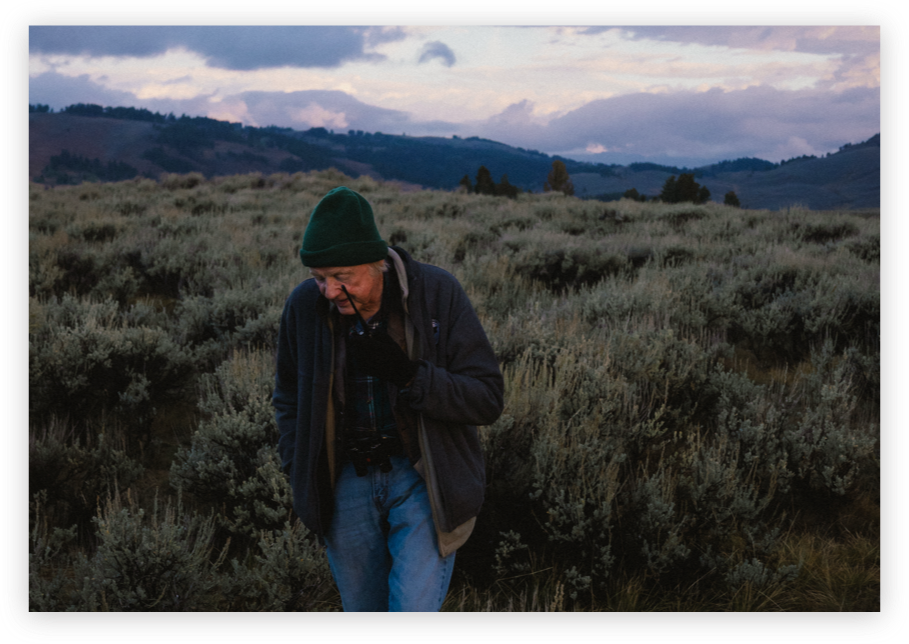
Photo by Fischer Genau
I stepped back from the scope, and not a minute went by before McIntyre invited someone else over to have a look. “If one person spots the wolves, they let everyone else know, and they help new people who don’t have scopes, with the premise that every new person that we show the wolves to and tell their story will be one more person on their side,” he explained. Wolves are still divisive across much of the west, with people pushing for them to be removed from the endangered species list so they can be hunted with fewer restrictions. But McIntyre and the other guides bringing people into the wolves’ territory to observe them firsthand are trying to tip the scales in the other direction.
The entire time we stood there in the sage, McIntyre talked with fellow wolf watchers, telling them stories about wolves like 302, whom he described as a teenager living in his parents’ basement that the ladies needed to watch out for, and 8, the runt of the litter who was picked on by his bigger, stronger brothers before becoming the alpha male of the largest pack in the park. “They really are all individuals, and just like people, they make their own decisions that impact their lives,” he told me.
The entire time we stood there in the sage, McIntyre talked with fellow wolf watchers, telling them stories about wolves like 302, whom he described as a teenager living in his parents’ basement that the ladies needed to watch out for, and 8, the runt of the litter who was picked on by his bigger, stronger brothers before becoming the alpha male of the largest pack in the park. “They really are all individuals, and just like people, they make their own decisions that impact their lives,” he told me.
Junction Butte Pack photographed from a fixed-wing during wolf study. Photo By NPS / Dan Stahler
We shared the knoll with a diverse crowd. A couple from Seattle told me it was their third year traveling to Yellowstone to see wolves. On their first two days this year, they’d gotten skunked, so that morning’s sighting was especially exciting. Another couple from Jackson, Wyoming told me this was their 30th year visiting the park with spotting scopes in tow, while a woman from Pennsylvania admitted it was her first time in Montana and her first time seeing wolves. Some bubbled with the satisfaction of getting what they’d come for, while others stayed glued to their scopes, watching. At one point, a woman from a tour group asked McIntyre if she could take his photo, and he submitted gamely, smiling at her with wisps of white hair poking out of his forest-green beanie.
McIntyre is “the OG watcher,” in the words of Yellowstone Wolf Tracker founder Nathan Varley, but there are other old hands who have been in the park watching wolves for decades. Varley himself is one, having moved to Gardiner in the 90s to work on the wolf reintroduction project and staying to launch his own guide outfit, although he doesn’t spend as much time in the park as he used to. Laurie Lyman, a former schoolteacher who fell in love with wolves and now lives year-round in Silver Gate, is another bastion of the wolf watching community, while a certain Jeff A. has become McIntyre’s right-hand man when it comes to tracking wolves in the park. Lyman operates a website called Yellowstone Reports that compiles wolf sightings. Once, wolf watching was a more niche activity, but now people like McIntyre share their passion with the masses.
McIntyre is “the OG watcher,” in the words of Yellowstone Wolf Tracker founder Nathan Varley, but there are other old hands who have been in the park watching wolves for decades. Varley himself is one, having moved to Gardiner in the 90s to work on the wolf reintroduction project and staying to launch his own guide outfit, although he doesn’t spend as much time in the park as he used to. Laurie Lyman, a former schoolteacher who fell in love with wolves and now lives year-round in Silver Gate, is another bastion of the wolf watching community, while a certain Jeff A. has become McIntyre’s right-hand man when it comes to tracking wolves in the park. Lyman operates a website called Yellowstone Reports that compiles wolf sightings. Once, wolf watching was a more niche activity, but now people like McIntyre share their passion with the masses.
Alpha female wolf of the Canyon pack; Photo by Neal Herbert
“I think for a lot of people it’s fulfilling a lifetime dream to see a wild wolf, so it’s a really big deal,” he said. “Initially it’s, ‘Gee I got to see a wolf.’ Then if they stick around, they actually begin to think, ‘I can actually see how they live their lives.’”
We watched the pups and yearling shadow the bison for thirty minutes through our scopes before they dropped into a ravine and vanished from sight. Before long, people began slowly packing up tripods and trickling back down the hill to their cars to try their luck elsewhere. But no doubt the wolves would be back soon, and with them the wolf watchers, peering into their scopes to watch their domestic dramas play out and, little by little, start to learn their stories.
We watched the pups and yearling shadow the bison for thirty minutes through our scopes before they dropped into a ravine and vanished from sight. Before long, people began slowly packing up tripods and trickling back down the hill to their cars to try their luck elsewhere. But no doubt the wolves would be back soon, and with them the wolf watchers, peering into their scopes to watch their domestic dramas play out and, little by little, start to learn their stories.