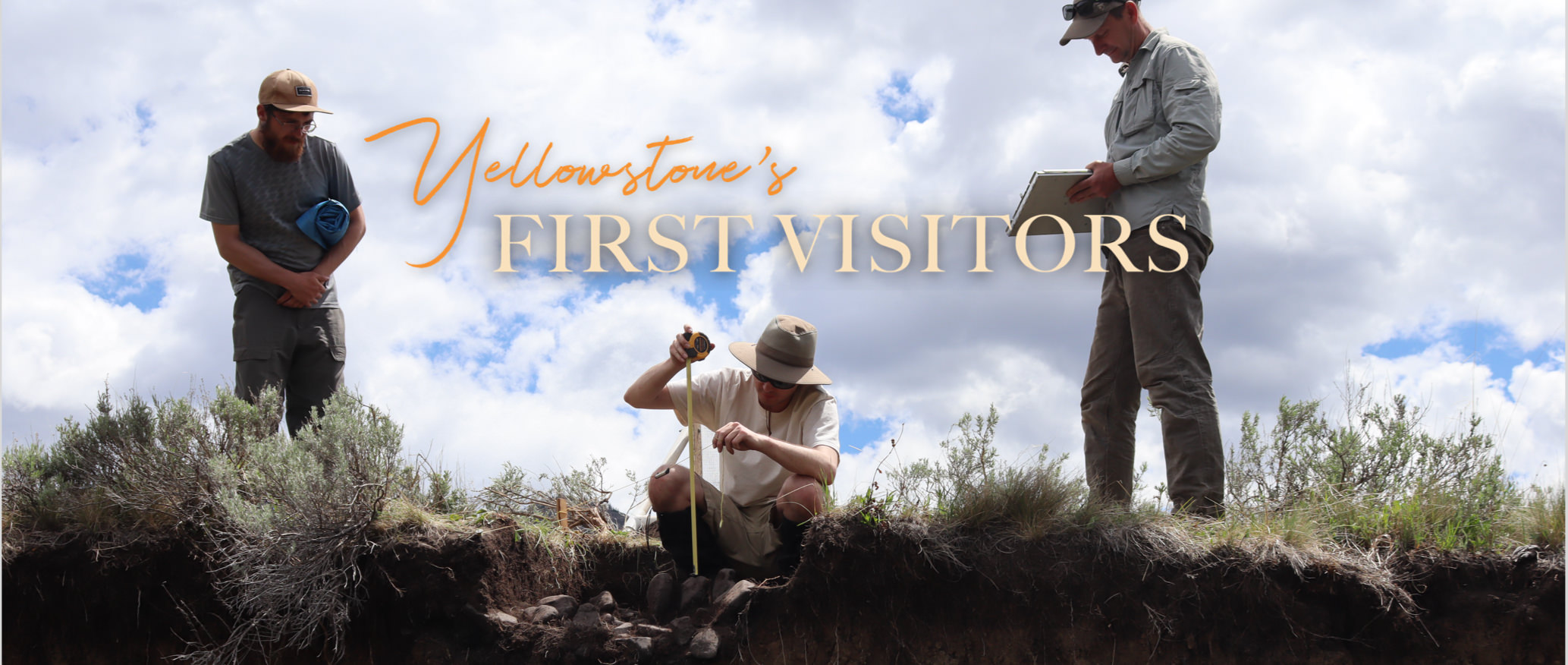
Doug MacDonald (right) oversees the excavation of an archaeological site in Yellowstone. In 2013, MacDonald and his team discovered a Clovis point near the south arm of Yellowstone Lake, proving the presence of the Clovis people in the park over 11,000 years ago. PHOTO COURTESY OF BRADAN TOBIN PHOTO.

By Fischer Genau
On sunny days, Obsidian Cliff lies almost completely in shadow. The rocky outcropping 15 miles south from Yellowstone’s north entrance was the first wayside exhibit ever built in a national park, and when I visited this summer, I had to squint into the midday sun to try to make out its dark face. The cliff itself is off limits, so I sat on a boulder at the end of a short trail on the other side of the road, and through the shadow’s veil, I could just barely see a black vein of obsidian cutting across the cliff’s face.
Upon closer inspection, the rock next to the one I was sitting on was not an ordinary boulder. It was black, chipped, and sharp, its surface gleaming. I reached down to feel its smooth edges and a piece jiggled loose. I thumbed it absentmindedly. I wanted to visit this site because of its archaeological significance—in that distant cliff face, which I’d driven by without second thought on every other trip I’d taken into the park, lie hidden the secrets of the little-known, millennia-long history of the first peoples to ever visit what we now call Yellowstone National Park.
Upon closer inspection, the rock next to the one I was sitting on was not an ordinary boulder. It was black, chipped, and sharp, its surface gleaming. I reached down to feel its smooth edges and a piece jiggled loose. I thumbed it absentmindedly. I wanted to visit this site because of its archaeological significance—in that distant cliff face, which I’d driven by without second thought on every other trip I’d taken into the park, lie hidden the secrets of the little-known, millennia-long history of the first peoples to ever visit what we now call Yellowstone National Park.
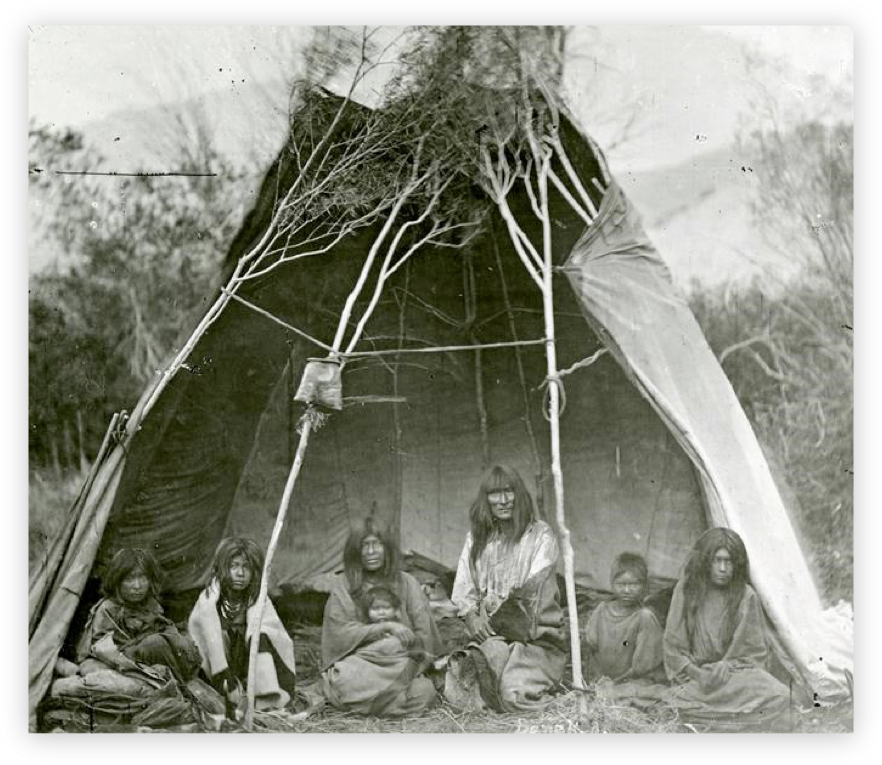
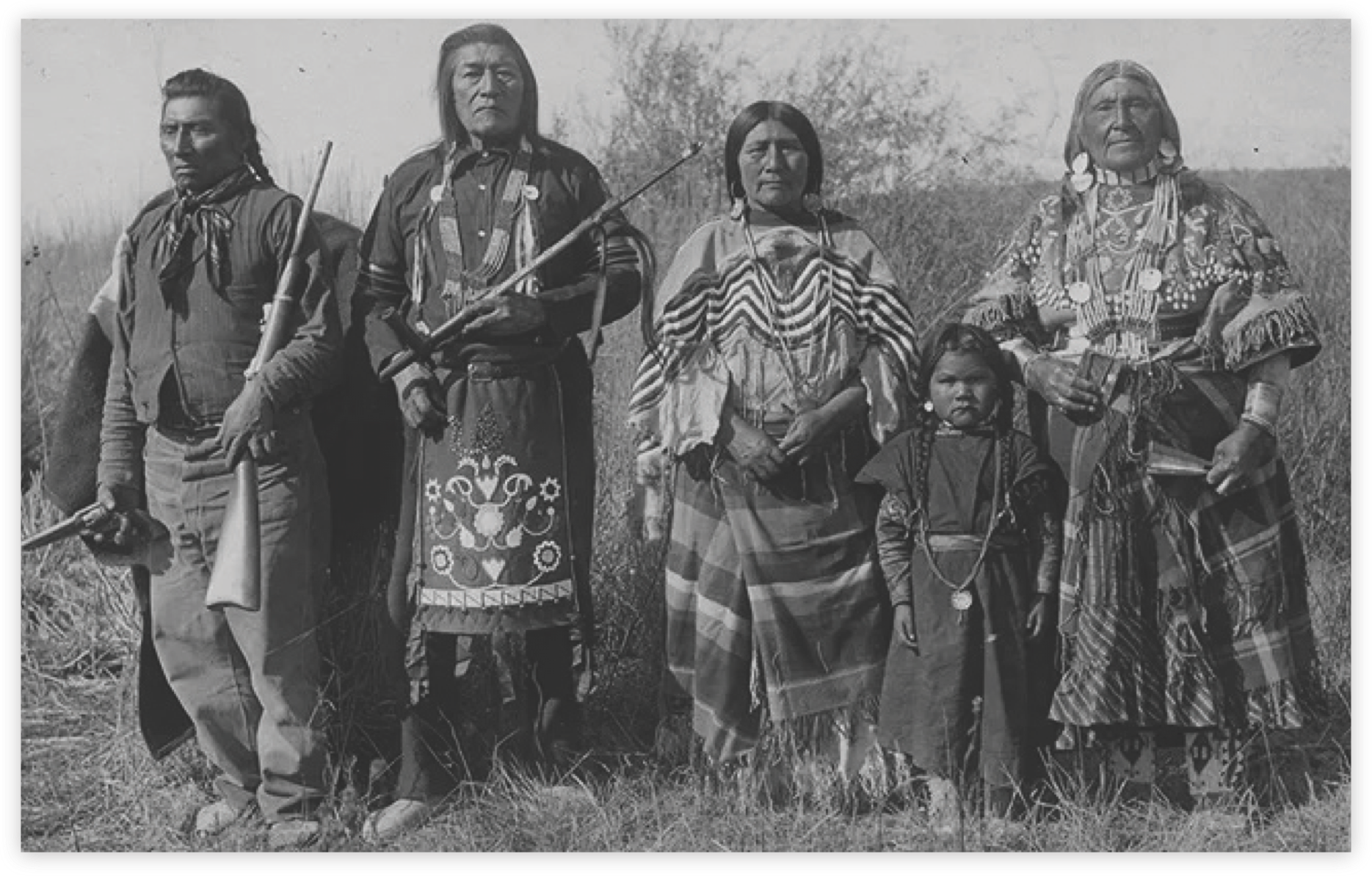
Tukudika (Sheepeater) men, women, and children in a tipi at Medicine Lodge Creek, Idaho in 1871. The Sheepeater, a band of Mountain Shoshone, lived for thousands of years on the land that would become Yellowstone National Park, with some of them staying within the park’s boundaries year-round. PHOTO COURTESY OF NATIONAL PARK SERVICE.
Around 13,000 years ago, a group of people called the Clovis spread across North America like wildfire. Archaeologists believe their descendants came from Beringia, a vast land bridge that once connected Asia with North America. For thousands of years, they were prevented from traveling further east and south by glaciers, but when the ice finally melted enough to grant passage, they stampeded into the continent. The Clovis occupied North America in a matter of centuries, leaving sites and artifacts in 48 states, and the highly successful hunters shared their new territory with a menagerie of fantastical creatures—three-ton giant land sloths, sabertooth tigers, and the original wild horses.
The Clovis weren’t actually the first people to live in North America. Recent archaeological discoveries strongly suggest that people had been living on the continent for millenia prior to the arrival of the Clovis, likely after sailing from Asia and exploring the Pacific Coast by boat. But it appears that none traveled as widely as the Clovis, and it was one of them who first laid eyes on Yellowstone.
The Clovis weren’t actually the first people to live in North America. Recent archaeological discoveries strongly suggest that people had been living on the continent for millenia prior to the arrival of the Clovis, likely after sailing from Asia and exploring the Pacific Coast by boat. But it appears that none traveled as widely as the Clovis, and it was one of them who first laid eyes on Yellowstone.
11,000 years ago, the Yellowstone area bore little resemblance to today’s panacea of life. For almost 10,000 years, an ice age covered much of the continent in thick sheets of glacial ice, and Yellowstone, due to its high elevation, was a cold, desolate land. Then, those glaciers retreated, carving out Yellowstone Lake in their wake, but it took another few thousand years for the area to evolve into its present form. When the Clovis first journeyed into Yellowstone, likely traveling up one of the many rivers and waterways that begin there, they were met by a cold, wet landscape. Summers were soggy and thick with clouds of mosquitoes, and the rivers were swollen and dangerous. Winters were long and brutal, and Yellowstone had none of the abundance of megafauna that we see today.
“You’re talking about an environment that wasn’t all that colonized by animals and plants like it is today,” Douglas MacDonald said. “It probably was not that amenable to people until around 10,000 years ago.”
MacDonald is an archaeologist and professor at the University of Montana, and he’s been studying the history of first peoples in Yellowstone National Park for decades. It was his team of University of Montana researchers that unearthed two Clovis artifacts proving their presence in the park. The Clovis are known for the long, fluted stone points they used to hunt big game, and MacDonald’s team discovered one in 2007 near Gardiner and another on the south arm of Yellowstone Lake in 2013.
Although they probably had superior hunting and foraging in the lowlands surrounding Yellowstone, the Clovis, as evidenced by their rapid spread across the continent, were explorers. MacDonald says they primarily roamed seeking natural resources like food and rocks to make tools. He says they also likely traveled to “keep connectivity across widely disparate hunter-gatherer groups,” by making social visits to nearby bands or venturing out to look for a family member or potential mate. Regardless of why they first ventured into Yellowstone’s interior, the Clovis found something useful there: Obsidian Cliff.
“[Obsidian Cliff] is the most important archaeological site in the park,” Shane Doyle told me. “It might be the most important archaeological site on the continent if you think about how much of that obsidian has been transported via trade routes to all four corners of this continent.”
“[Obsidian Cliff] is the most important archaeological site in the park,” Shane Doyle told me. “It might be the most important archaeological site on the continent if you think about how much of that obsidian has been transported via trade routes to all four corners of this continent.”
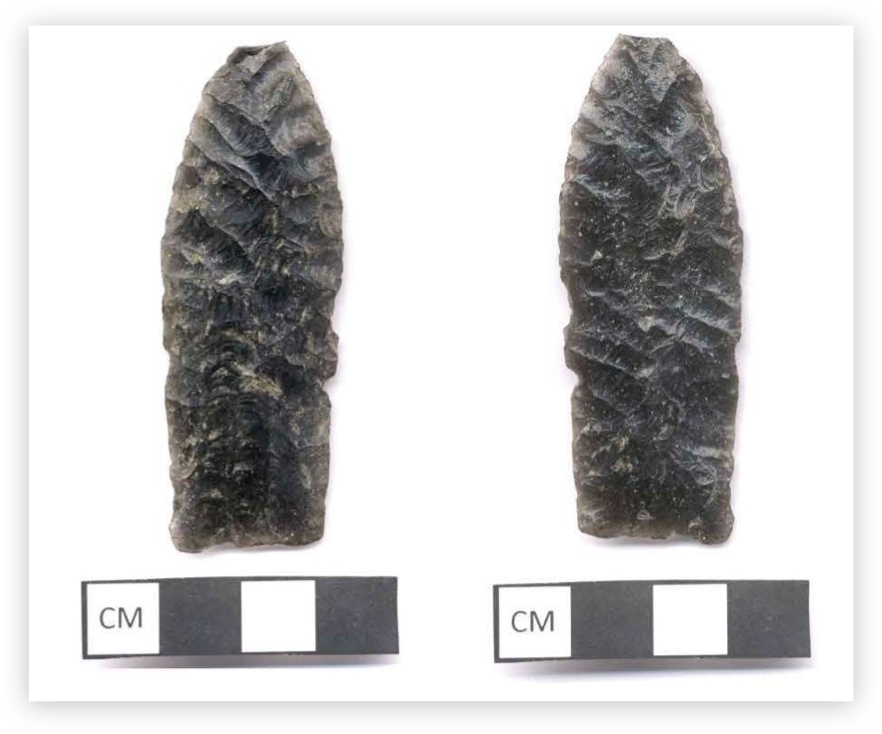
One of the Clovis points recovered by MacDonald’s team in the Yellowstone region. Clovis points have a distinctive groove, or flute, chipped into one or both of its faces.
PHOTO COURTESY OF MONTANA YELLOWSTONE ARCHAEOLOGICAL PROJECT.
PHOTO COURTESY OF MONTANA YELLOWSTONE ARCHAEOLOGICAL PROJECT.
Doyle is an educational and cultural consultant from Crow Agency, Montana, and his Apsáalooke ancestors once gathered obsidian from the cliffs to fashion into tools just as the Clovis did thousands of years before them. Experts estimate that Obsidian Cliff contains enough of the magma-formed stone to fill 3,000 pro football stadiums, and its progeny have been found littered all over North America.
People of the Cody culture were the first to use Yellowstone obsidian frequently around 9,000 years ago, and after the Cody, subsequent cultures left artifacts in Montana, Wyoming, and Idaho. Around 3,000 to 1,500 years ago, use intensified, and Obsidian Cliff obsidian became a highly prized commodity across the continent. In Mound City on the banks of the Scioto River south of Columbus, Ohio, archaeologists unearthed 300 pounds of obsidian in just one burial mound, and 90% of it was traced back to Obsidian Cliff. This means that the Hopewell people of that area either traded with other tribes for the stone or else traveled hundreds of miles by foot and canoe to bring back hunks of the black gold.
MacDonald and his University of Montana team conducted a survey at Obsidian Cliff in 2014, and he described his findings in his book Before Yellowstone: Native American Archaeology in the National Park: “Rivers of worked obsidian are present at the cliff, with large obsidian boulders broken open by Native Americans to make their tools. The ground is covered with literally billions of flakes, the by-products of the manufacture of millions of stone tools…The entire ground surface for thousands of acres at the cliff is covered by flakes from stone tool manufacture. In every direction around the cliff, there are thousands of stone tool production sites.”
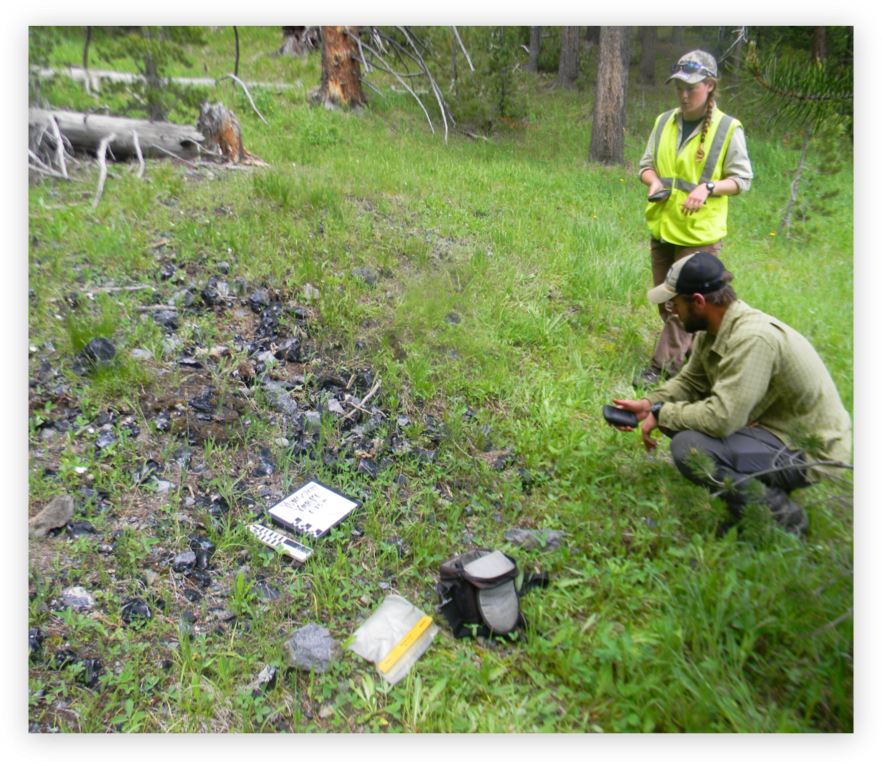
The team from the University of Montana’s Montana Yellowstone Archaeological Project surveys a site near Obsidian Cliff in 2014. The area surrounding Obsidian Cliff is littered with thousands of artifacts from indigenous use.
PHOTO COURTESY OF MONTANA YELLOWSTONE ARCHAEOLOGICAL PROJECT.
PHOTO COURTESY OF MONTANA YELLOWSTONE ARCHAEOLOGICAL PROJECT.
From the roadside exhibit, I couldn’t see any of what MacDonald described. Native Americans mostly mined above the cliff, and Yellowstone has closed the area to visitors to prevent them from carrying away the bluff piece by piece. But MacDonald and others are calling for a different approach.
“There are a couple places to get access to [Obsidian Cliff] that aren't that difficult, and I've often encouraged Yellowstone to make a visitor trail that keeps it so people could see some of the quarry pits,” he said. MacDonald wants visitors to the park to have the opportunity to learn about Native American history firsthand, especially considering that it’s long been a blind spot for the national park service.
“When you go to the national parks, you learn a lot about the environmental history. You learn a lot about the animals, the plants, the water ecosystems. But the blind spot there is a cultural blind spot,” Doyle said. “Yellowstone, since the beginning, has been a nexus point for over a dozen tribal nations…I would just want people to know that it’s always been an important place for a lot of different people.”
Native Americans have lived in every nook and cranny of the park, but that information was almost impossible to find in the park for decades. Doyle says that people who wanted to sell Yellowstone National Park as a tourist destination wanted to sell the idea that it was a safe place. That meant glazing over the presence of Native Americans and marketing Yellowstone as a pristine natural landscape, untouched by humans. That myth persisted until recently.
“In the last five years, Yellowstone’s done a much better job of disseminating information about Native American history,” MacDonald said. “Just in recent history, [Yellowstone] has done a much better job at acknowledging deep Native American past,” Macdonald said. “But till that point, it was invisible.” “Even today, I think it’s somewhat difficult for people to find that information. They have to be kind of looking for it. I would encourage Yellowstone to develop walking trails, if not to archaeological sites, then to environments they used frequently, so people who are into hiking and that kind of thing can explore Native American history.”
Sitting by the bank of Obsidian Creek, contemplating the impassive rock face across the road, I tried to grasp the significance of what I was looking at. The cliff was unwilling to give up its secrets, but every so often, I would get a shiver of recognition. Generation after generation of humans traveled here long before I did, and while I came as a tourist, hoping for a fleeting glimpse into the past, they came as its residents. Before it was ruled off limits to human interference, Native Americans traveled here with a practical need, chipping off pieces of pure, black obsidian and turning them into the tools they used to make their lives. The history of Native Americans in Yellowstone is little-known, once purposefully obscured and now simply overlooked. But at Obsidian Cliff, that history is on display for those who come seeking it.